Showing posts with label academic libraries. Show all posts

Thursday, March 20, 2014

Library Publishing and Open Textbook Initiatives


"The cost of college textbooks has skyrocketed in recent years. To students and families already struggling to afford high tuition and fees, an additional $1,200 per year on books and supplies can be the breaking point."

- Fixing the Broken Textbook Market 2014 report by the U.S. PIRG Education Fund and The Student PIRGS.

In addition, according to the report "65% of students said that they had decided against buying a textbook because it was too expensive. The survey also found that 94% of students who had foregone purchasing a textbook were concerned that doing so would hurt their grade in a course. More than half of the students felt significant concern for their grade." 

Our university president recently commented to the faculty senate that the cost of textbooks has become a major factor for students in attending college. His comment aligns with the quotes and report above. 


Update: Open Textbooks: The Billion Dollar Solution - 2015 report by The Student PIRGS.

A couple of years ago I worked with my university's director of educational technology to help faculty create textbooks for specific courses. We demonstrated how to get started building ePubs in a couple of faculty workshops by using articles in our library databases (when license permitted), OERs, library e-book chapters (when permissible), and their own writings. We also chose a platform that would allow all students to access the books regardless of what type of device they might be using. From the Android OS to iPhones and tablets, laptops and desktops. A couple of our tech-savvy faculty gave this a good try. In the end they reported that the time and effort involved in getting the textbook ready for the course (with limited IT and library help), was simply too great. 


Shortly after my experience with creating our homegrown textbooks, I heard about the SUNY Open Textbook Initiative. “SUNY Libraries are working with faculty to reduce costs to students, promote authorship, invest in readership, and support teaching and learning."

-Cyril Oberlander, Director of Milne Library at the State University of New York at Geneseo and the Principal Investigator for the Open SUNY Textbook Project. 

Over the past year I've been exploring and learning about a variety of open textbook initiatives. I’ve curated a set of articles and videos on open textbooks and library publishing initiatives on Scoop.it for those who are interested.  

Academic libraries have been increasingly involved with this movement, and there are a number of initiatives around the country that are gaining momentum. A recent library publishing conference I listened in on via the #LPforum hashtag on twitter mentioned several initiatives that were making good progress (see link to curated articles above). I’m looking forward to reading the Library Publishing Forum 2014 proceedings when published later in the year. A couple of blog posts that were written about the event helped fill in the gaps from twitter, this blogger did a nice job summarizing.


Though it's still early, successful open textbook initiatives are beginning to have greater impact. Learn about Rice University OpenStax textbooks in the videos below. There are quality peer-reviewed open textbooks available now that I feel comfortable recommending to faculty as an alternative to costly textbooks. However, the numbers are still small.


It was encouraging to read that over 2,500 professors had signed the open textbook statement of intent to include open textbooks in their search for the most appropriate course materials. But we need faculty members to make a commitment to using open textbooks or OERs for their courses. We also need more quality peer-reviewed open textbooks from which faculty can choose. This is where involvement and participation in the open textbook movement by libraries like mine could help. 

Small universities do not typically have the resources to start an initiative for publishing open textbooks. However, we are part of a consortium of 37 colleges and universities in the pacific northwest known as the Orbis-Cascade Alliance (OCA). One of the OCA [library] directors, Faye Chadwell, the University Librarian at Oregon State University (OSU) and director of OSU Press, was a featured speaker at the recent Library Publishing Forum. This news piece was shared in the #LPForum twitter chat and alerted me to the work already begun at OSU: OSU open textbook initiative aims to reduce student costs, enhance learning. Another OCA member librarian, Karen Estlund, Head of the Digital Scholarship Center at the University of Oregon (UO) Libraries, also presented at the LPForum. 


I would love to be involved in writing a grant for an Orbis-Cascade Alliance Open Textbook Initiative. We could solicit one textbook from each institution, providing some cash to the lucky professor who gets chosen at each school, with half of it payable when the book is complete.  If we could get this rolling and get a batch of texbooks every year, we would soon have a collection that would matter, and that participating schools and others could use with pride.  


Definition and characterizations of Open Textbooks - simply put, college texts offered online under a license that allows free digital access and low-cost print options. 

Would love thoughts from others about library publishing and open textbook initiatives. How doable is it? Are the challenges too great? Would the benefits to students be worth overcoming challenges that arise? Seems to me they would. 

Wednesday, February 19, 2014

Educause Connect: Portland

Portland, Oregon was the first of three test cities for a new model of Educause conference event known as Educause Connect. Tag line: Solve, Network, and Grow - Less "Conference." More Professional Development. Below are my thoughts as a participant and presenter (now known as "content leader").


Online pre-conference meetings were scheduled for content leaders and included our designated learning track facilitators. The meetings were designed to help us learn about the new learning format and how it was different from past conference events. We learned that changing to the Connect learning format meant our sessions were to be less about presentations and more about facilitated dialog, conversations. Like we often hear in higher ed, it's time to end the sage on the stage. And they really meant it. Before our second pre-conference online meeting we were notified to be ready to tell the group what specific interactive strategies we would use during our session. Preparing for that meeting helped my colleague and I to nail down a couple of tools to use during our session.

The first tool we chose was TodaysMeet along with the #EConnect14 conference hashtag for those on twitter as a back channel. (A benefit of TodaysMeet is that it works on most devices and no login or account is required to start using.) Participants were asked to introduce themselves in TodaysMeet at the start of our session to familiarize them with the tool. I asked a couple of questions during the second slide; after that the session participants led the way with questions and comments throughout (some raised hands to speak, some spoke out, and others posted on TodaysMeet). My co-presenter (or co-content leader?) was able to address questions being posted on TodaysMeet and those raising their hands, while I shared and forwarded slides, and conversation ended up flowing nicely.
The other activity for engaging the group was to participate in a rubric activity created by my colleague and co-presenter, Professor Anna Berardi. The rubric activity was well received. Unfortunately, due to the level of participation in discussion, we ran short of time and the activity had to be rushed. We would rethink that strategy for next time, perhaps mentioning a discussion cut off time at the start and beginning the rubric activity sooner.

In the end, I thought our session went well (evaluations coming soon, and we'll see :) ). It helped that the keynote speaker, Kevin D. Jones, talked about the value of failing, that it was okay to fail and if we weren't failing we weren't taking risks, weren't learning to trust, weren't really learning at all, and that was a negative fail. At least that's how I heard it. Bottom line, the keynote was encouraging and helped me relax as did the new format. I found it easier to share and have a conversation rather than the more traditional presentation format. Overall, I liked the new Educause Connect learning format and I'm looking forward to sharing takeaways with librarians and others at my university.

Regarding sessions: A session by ASU librarians has piqued my interest in digital badges and I plan to further investigate. I ended up jumping over to the Mobile/BYOE track the second day and was fascinated by CSUN's tablet initiative. And I thoroughly enjoyed the future trends in mobile session.

I attended the Educause Regional Conference in Portland in 2012 and have attended the larger Educause ELI conference in the past. The new Connect format helps in making connections and allows for deeper learning in a particular track. The last day of the conference, with the exception of the closing keynote, was mostly conversational led by our track facilitators. In our case, the facilitators for the online learning track, John Farquhar and Crista Copp, did an excellent job throughout. Their role in the event was helpful and important, they kept us on track. Good facilitators seem key to the success of the new format.

The PDF of our presentation is on the Educause Connect page in the box below with the exception of the rubric created by Professor Berardi. We're working on writing up our experience for publication and will include the rubric at that time. Our slides have been uploaded to Slideshare.

Monday, November 21, 2011

Innovative Academic Libraries...on a budget?

The library director and staff at my university library have been discussing ways in which we can implement innovative changes in our library space to better meet the changing needs of our users. These conversations have been happening for some time but space changes and innovative technologies come at a cost, and budgets have never been tighter for many of us in higher education.

I'm a believer in the value of the library as a hub of the university. The videos and links below showcasing the University of Calgary's new Taylor Family Digital Library (TFDL), exemplify what is possible when a university (and a city!) fully realize the value of investing in the library (to the tune of $205 million!). The University of Calgary and others see the library as the place that can help shape the future of learning. This is an extreme example, I'm sure it's a dream come true for many on that campus, and will surely be a major draw for the institution.

Many university libraries are looking at ways to meet changing user needs. Besides smart planning, we need buy-in from university administrators in the way of dollars to implement changes. A good deal of student, faculty, and staff time is now spent in digital space. How can our libraries, especially those on a tight budget, help meet the space and technology needs of our users? What can we do to facilitate learning, to help our users build the 21st century skills needed to succeed in our digital world?

Harvard has been holding conversations on the "Future of Libraries" as have many of us in higher education.

This topic is one I have followed for some time, the "Libraries of the Future" and "Academic Libraries As Place" are blog posts I've written in the past. I believe it's time for action.

Below is a video of the grand opening this past October of the University of Calgary's Taylor Family Digital Library. For those who want to learn more about the TFDL, I'll also link to a storify.com story I created to pull in information from various sources on University of Calgary’s Taylor Family Digital Library and how it's shaping the future of learning.

Please feel free to comment on how libraries with limited budgets might begin to implement change within their space.

Friday, March 25, 2011

QR Codes and The Academy


(click image for clarity)

A while back I read a post titled "QR Codes Everywhere But Higher Ed?" by Mike Richwalsky (@mrichwalsky). I noticed Mr. Richwalsky also wrote a post back in February 2009 titled "QR Codes: Is it Time?" so he's been tracking these codes for a while.

I've had similar thoughts about QR Codes. And, like others, we've been slowly implementing the codes in our university library. Recently our marketing department created a nice promotional card for our new mobile library site, which included a QR Code for easy access (incl in flickr set below). Overall, higher ed has been slow to adopt QR codes, but based on the number of conferences and presentations featuring this simple technology, that may be changing.

I've seen QR codes in our Best Buy and a few other stores, and there is a definite increase in our local newspapers and mailers, but QR codes are still not a mainstream technology in Portland, Oregon USA. I'm not sure why, though I have some theories (another post). And the majority of people I know (other than early adopter librarians and techies) still don't know what they are.

At times I wonder if QR codes will ever mainstream in North America, and lately I've decided that for some purposes, I don't think that it matters.

Institutions of higher education and libraries (public and academic) are places that I believe can benefit from using QR codes even if they never mainstream, at least for now. Simply put, they are a low threshold technology that provide a lot of bang for the buck. In some cases I think we could ask ourselves why we wouldn't use a QR code. I'm not saying let's start blanketing our libraries and campuses with QR codes, but a QR code on a mobile website promotional card, in a university brochure, and various other places just makes sense to me.

I've embedded my most recent presentation on QR codes below. The presentation includes examples of how QR codes are being used in libraries, with publishers, vendors, retailers, and popular culture.
An article titled "7 ways higher education can use QR codes to connect with current and prospective students" has ideas to assist those in higher ed in getting started.

The Arboretum - Next Generation of Learning blog from the University of Oregon has a number of QR code posts worth reading by Robert Hill Long (who recently found and kindly posted my QR code article). Mr. Long has some great ideas for implementing QR codes in higher ed, and I suspect there will be more posts to come.

Below is a YouTube video on QR Codes at the University of Guelph:


I've embedded a new flickr set dedicated to QR codes and the academy which I'll be adding to as I discover more:


And finally, A press release on the journal NEUROSURGERY® titled "Medical Journal Using QR Codes to Link Print and Digital Video" includes a QR code (which is also on the cover of their April 2011, Vol 68, issue 4 publication). When scanned or photographed, that particular QR code takes users to one of the clearest QR Code tutorials I've seen yet. For those who don't yet use QR codes, I'll include the youtube video of the tutorial below:


I'd love to gather more examples of QR codes related to higher education. Please feel free to recommend links to information or images in comments.

Wednesday, February 9, 2011

Mobile Impact - Libraries & Higher Education

The ECAR (EDUCAUSE Center for Applied Research) Study of Undergraduate Students and Information Technology, 2010 was released in October along with the Key Findings (PDF bottom left).
“The ECAR Study of Undergraduate Students and Information Technology, 2010 is a longitudinal extension of the annual 2004 through 2009 studies. It is based on quantitative data from a spring 2010 survey of 36,950 freshmen and seniors at 100 four-year institutions and students at 27 two-year institutions; student focus groups that included input from 84 students at 4 institutions; and review of qualitative data from written responses to open-ended questions.”

In preparation for two upcoming presentations related to mobile technologies in libraries, I've been following statistics on cell phones, feature phones, smartphones, and other handheld devices (i.e., iPod Touch, etc.) in the US and abroad. Page five of the ECAR Study Key Findings contains "Figure 2. Internet-Capable Handheld Device Users, 2009 and 2010," and the statistics clearly indicate exponential growth.

In viewing the charts in Figure 2 of the Key Findings, I found it significant that the percentage of those in the study who own Internet-capable devices jumped from 51.2% in 2009 to 62.7% in 2010. However, what really grabbed my attention were the stats that show the change in how students are using these devices, with 33.1% who own and use the Internet on their device in 2009 to 48.8% in 2010. That 15.7% increase in Internet use, with almost half the students using their handheld devices to access the Internet (likely over 50% by now), is what is bringing us in higher education and libraries to a tipping point. And the momentum is clearly growing outside of higher education as well (see yesterday’s report from Financial Times on smartphone growth).

Every student I’ve asked recently has said they will probably purchase a mobile device with Internet access soon (or have the data plan on their existing phone turned on) because it is finally becoming affordable (along with the allure of apps-see video below). With the fierce competition amongst carriers, data plans are dropping (T-Mobile is aggressively marketing fast 4G and “entry-level data plans that start at $10”). If costs remains low, my guess is that the number of students accessing the Internet on their handheld devices in next year’s ECAR report will show an even greater percentage of increase.

What does this men? What kind of impact will mobile devices have in higher education? I’m still not sure, but I’m paying close attention. As an academic librarian I’m interested in learning how we can leverage the technology available to us to better serve our students with computers in their pockets. As the proliferation of Internet accessible mobile devices continues (remember most US college campuses are completely wireless, and those who can’t afford data plans are often able to purchase the iPod Touch, which on wireless almost equates to an iPhone), I want to be ready.

Forward looking librarians are already on it. Take a look at the upcoming Handheld Librarian Online Conference IV. View the topics and issues being covered, and the ways in which innovative librarians are working to serve their mobile constituents. The program includes trends in mobile technology and features many ways librarians are utilizing mobile, everything from SMS and mobile instruction, to QR codes, augmented reality and more.

I hope to learn a great deal while attending the Handheld Librarian IV conference. Librarian roles are changing, and whether in public or academic libraries, I believe mobile technology and librarians who understand mobile user needs, will become increasingly more important.

Lastly, below is an amazing entertaining video that drives home the fact that indeed “The Times They Are A-Changin


Monday, October 25, 2010

Futures Thinking for Academic Librarians

ACRL released a report in June titled, “Futures Thinking for Academic Librarians: Higher Education in 2025.” The goal of the report is "to prompt academic librarians to consider what trends may impact the future of higher education in order to take strategic action now." As a librarian/educator, I wholeheartedly agree that watching trends that may impact our future is important, and I was glad to see this report.

A variety of themes are covered in the report and 26 futuristic scenarios are presented. A survey instrument was developed for the purpose of measuring the probability of a scenario, impact (if the scenario were to occur), speed, and whether a scenario represents a threat or opportunity to academic libraries (for the record, I see most change as an opportunity for academic libraries, just not always business as usual).

One of the four scenarios rated as highest in probability, impact and speed is a scenario titled “Right here with me.” In this scenario students use their handheld devices in almost magical ways. The devices sense information, processes are automated, and more. Reading this reminded me of two newer technologies being used in the US, QR codes and augmented reality, which can seem a bit magical as well. These technologies provide access to information on mobile devices without keying in terms to search.

I’ve been following mobile technology trends for some time (see my first mobile test blog using a simple Motorola RAZR phone and $5. data plan) and I’m a strong believer that the digital revolution we're experiencing will be increasingly mobile. Though I'm uncertain of all that will evolve with mobile technologies in the next 5-15 years, QR codes and augmented reality are two mobile technologies that could have a strong impact in libraries and higher education. In the case of QR codes, I think sooner rather than later as early adopters in the U.S. are currently exploring and implementing this technology in their libraries, on campus, and beyond.

This week I'll attend the ACRL-Oregon & Washington Fall Conference 2010. The title, "If we knew today what we'll know tomorrow: Futures thinking for academic libraries," has me excited about learning from others who value looking forward.

I'll be presenting a five minute lightening talk at the ACRL OR/WA conference using the presentation below. This slideshow compliments an article, which will be available in the November publication of C&RL News on QR codes and mobile users. (Update: C&RL News article is now available.)
All posts tagged with "QR Codes"
All posts tagged with "augmented reality"

Sunday, July 11, 2010

QR Codes in Libraries


QR Codes are appearing more frequently in the U.S., though the technology is still largely unknown to the majority and mainstream adoption will take time. Recent developments are raising awareness of QR codes in the country (UPDATE 7/29 more major QR code exposure), and librarians in libraries everywhere are busy experimenting, learning from each other and sharing results.

I created  an introductory flier to share with students and faculty as we continue to research and brainstorm ways to utilize QR codes in the library and on campus.

The Portland Center of my university, where I work as a reference librarian, serves primarily graduate and doctoral students. They are busy adults, many with families working full-time jobs while attending graduate school. Any new technology that is introduced must have enough value to warrant their time and effort. Because QR Code technology is very simple to use, I think there is a good chance of seeing this technology utilized IF doing so makes their lives easier (i.e., QR codes on study room doors to take users directly to the room reservation online form can save time and effort). The main undergraduate campus library has also introduced QR codes and it will be interesting to observe usage between the different groups.

The Journal of Information Literacy recently published an article by Andrew Walsh titled, "QR Codes – using mobile phones to deliver library instruction and help at the point of need." From the Abstract:
This article outlines the practical uses we have found for QR codes, gives preliminary results of how those have been received by our library users in our pilot study and highlights the reluctance of many students to engage with this technology, which may need further investigation.
It's a worthwhile read from which we can learn a great deal, but keep in mind the research was done close to a year ago and there have been significant changes since that time. Many of the same challenges exist today, especially in the U.S. where we are lagging in the use of QR codes and other mobile technologies. However, awareness of QR codes is growing in the US, and QR code technology has developed greatly the last few months in both quantity and quality of apps. I've personally culled a number of apps as better apps have been made available (no longer is taking a picture necessary on some devices as newer apps quickly and accurately scan the codes).

The author also mentions that QR codes are "an easier alternative to full augmented reality," and I agree. However, augmented reality is another technology that has seen significant development over the past few months. I've been experimenting with augmented reality (AR) apps, which I hope to utilize for library tours and other purposes (blog post to come - done and here). At the moment (until the next new technology) I feel that both QR codes and AR will have a place in the library and the university. This post on augmented reality and handheld devices from a year ago highlights the different amazing apps at that time and I expect to continue to see gains in AR and QR code development.

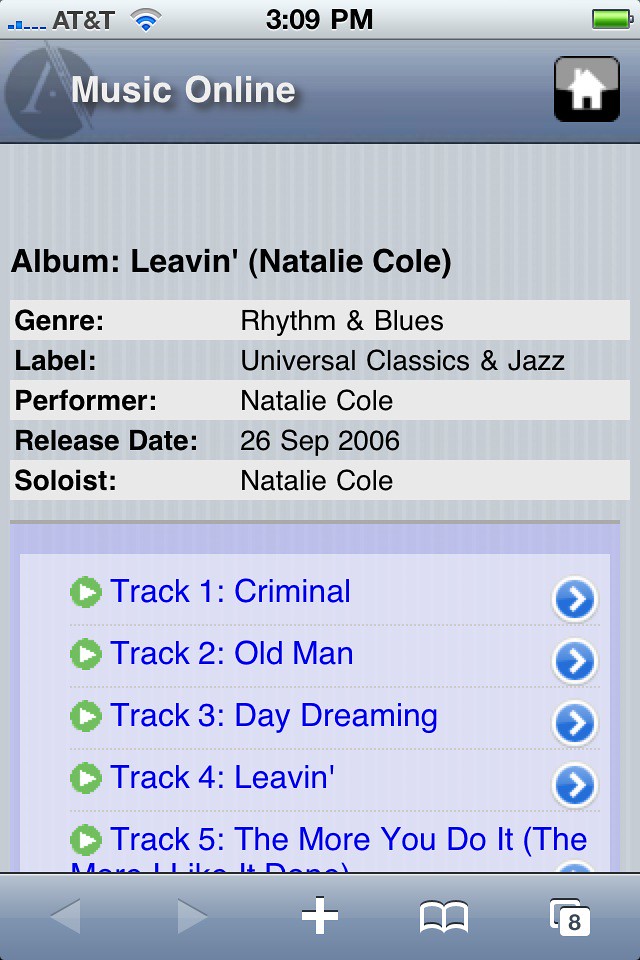
Lastly, this past Friday I discovered (via a tweet to a flickr screen shot) that Alexander Street Press (ASP) had made QR codes available in their Music Online database. I immediately logged into our subscription database, picked an album, found the code, scanned it and was listening to music via a beautiful ASP player on my iPhone 4 in less than two seconds. Below is a screen shot I took to share (with an expired QR code (explanation below), so no legal worries :) ).

Screen shot 2010-07-09 Music Online QR Code

I was in my office on our university's wireless system at the time I had logged-in and assumed the music would stop working on my iPhone once I left the office, but that was not the case. After arriving home, I found that I could still listen to the music on my iPhone and at that point I was perplexed as this music was from a subscription database. I continued to experiment with the music database QR codes throughout the weekend.

On Sunday I was searching for information on how the Music Online codes worked when I came upon this Library Journal post"Alexander Street Press, Mobile Streaming Audio, and QR Codes" The article explains that a specific collection of music was being made freely available to all until August 15h. However, the music I chose was not from the free collection and though the article was indeed great exciting news, it did not answer my questions on how/why I could access the subscription databases on my phone without being logged in.

After further searching I found this Alexander Street Press link to a page titled "Using Your Mobile Device" from their Music Online database. Included here is the statement "Mobile shortlinks (used to create the QR code) allow you to listen even when outside of institution network, allowing you to listen from your own home. Please note that shortlinks cannot be used outside of your institution network after 48 hours, but will still be usable within it." I verified today that all the links to music I had bookmarked on my iPhone on Friday have indeed expired. I was also able to easily login as a remote user from my home yesterday and once again added a number of album selections to my IPhone.

I'm very pleased and believe that what Alexander Street Press has done with Music Online and QR codes is the type of development that will drive mainstream adoption in libraries. I'm looking forward to what publishers and database vendors and others (including librarians!) will be doing to help make using library content on the go even more feasible and exciting.

How is your library using QR codes? Comments are welcome.

BTW - The QR Code generator I've been using is Kaywa and my current favorite free QR code reader app for iPhone, iPod Touch, Android devices and many more is the i-nigma reader.

Friday, November 13, 2009

Why "Clay Shirky: The Social Media Revolution" Matters for Academic Libraries

Below is a recent interview with Clay Shirky I want to share. It's 23 min. long and worth the time. He starts off talking about twitter and why it's important and how it's evolving. There are some direct references to ebooks, bookstores, libraries etc. but it's not really about that. It's about what's happening in the world of social media and about what may come. Important stuff for academic librarians and others in higher education to consider these days.


Clay Shirky's 2005 article "Ontology is Overrated: Categories, Links, and Tags" had an impact on me back in the earlier Web 2.0 days. I was a newer librarian and folks in the library profession were beginning to understand our profession would be experiencing significant change. Librarians began to wrestle with folksonomy vs. taxonomy and more, much more, and at an increasingly rapid pace.

I've continued to follow Shirky's writings on the Internet and disruptive technologies because...well, because there's a digital revolution taking place and these things are of critical importance to libraries.

I was also glad to see a tweet a couple of days ago pointing me to a new publication by OCLC Research. The "Call to Action" section in the two page PDF below is about how librarians need to keep up on what's happening in the field of scholarly research and publishing and adapt our practices to the changing needs of researchers. It also states, "Developments such as cloud computing, open access publishing and online social networking are affecting research practices." The report includes a citation and link to Clay Shirky's post "Newspapers and Thinking the Unthinkable," which is valuable reading as well.

I've put these two things together in this blog post because I've found as an academic librarian, at this time in history, it's more important than ever to follow and understand what is happening in this social media/digital revolution. I'm not sure I could really feel prepared to play a central role in support of scholarly research and publishing at my institution otherwise.

An Academic Library Manifesto
OCLC original PDF: Chris Bourg, et al., for OCLC Research

Sunday, August 16, 2009

Ebooks, Ebook Readers, Mobile Devices and Academic Libraries-Part 1


Librarians at my university have been closely following developments related to the ebook industry, ebook readers and mobile devices in higher education. The library director and I were recently conversing on this topic via email and the bolded questions below were posed. Discussions on this topic are being held in academic libraries around the globe. My responses to the questions (my best guess, really) are posted here to share with colleagues and others in academic libraries who may want to join in the discussion. Comments welcome.

Will our constituents "soon" be willing to read many of their books on MOBILE DEVICES (meaning cell phones & smartphones)?

I do NOT think reading ebooks on small cell phone devices (non-smartphone type) will have a large following amongst our constituents (and not for most of us in this country, though I understand it's quite popular in Japan and some other countries). Smartphones, on the other hand, (iPhones, Palm Pre, Blackberry, Android devices, etc.) are another story.

I believe that young people (undergraduate students) WILL soon be willing to read many books on quality smartphone devices. For many undergrads there is a compelling convenience factor. Students are mobile and most always have their smartphone device with them. During a spare moment they can easily fit in some reading. However, I also think reading on a larger computer or reader device and print reading will continue as well for some time for all age groups. Older graduate students and faculty, I suspect, would be less willing to read many of their books on current smartphone devices.

Many baby boomers, like myself, might choose to read ebooks occasionally on their current smartphone devices. For example, I have downloaded a couple of ebooks (using stanza and the kindle iPhone app) so that if I'm ever stuck somewhere and have to wait for whatever reason I can pull out my iPhone and read a chapter of an ebook. I don't do this often and instead usually choose to read a NYTimes article on my NYTimes iPhone app. I would never choose to pull out my current iPhone to read an ebook if I was home and had access to a larger device for reading or my laptop (simply too hard on aging eyes).

Will our constituents "soon" be reading most of their books on any electronic device (in this I include Kindle, the new Mac netbook, etc., etc.)?

That depends on what is meant by "soon." If it means within the next 12 months, I would guess that our constituents will NOT be reading "most" (but possibly many) of their books on an electronic device. And I also doubt "most" academic books will be available in electronic format within the next 12 months (that partly depends on publishers and effective cost models, etc. and it's complicated as this article explains).

My guess would be that within two-three years many, and possibly the majority, of undergrads, grads and faculty will be reading most of their academic books (textbooks and monographs) on an electronic device of some kind (it really depends on how quickly some of the technology is brought to market and the availability of academic books in ebook format).

One of our grad student recently shared with me that in her undergraduate program at another university, which she finished almost a year ago, all of her textbooks were provided for each class in electronic format. Students in her program were required to pay a flat $75 book fee for each class in which they enrolled and the books were delivered electronically. That practice, if widely adopted, could significantly propel ebook use forward.

Will our constituents still prefer reading books in print (paper) format but likely will accept/prefer books on demand (printed from electronic)?

I think there will be a continued demand for print books (how much that will decrease due to ebooks, I'm not sure). I'm not very familiar with books on demand, and may not know enough to really answer this properly. I looked into books on demand/print on demand while working for one year at a public library a few years ago. I recently took a quick look at more recent information on this topic. NPR has a good broadcast available (transcript and podcast) titled "Company's 'ATM For Books' Prints On Demand."

The company, On Demand Books, makes a remarkable claim on their site. I've also read many articles and posts regarding ebooks and the coming revolution. Time will tell, but for academic books it seems ebooks make more sense (easier to search, annotate, hyperlinks in some cases, etc.). The makers of the Espresso book machines point out that print is still widely more popular than electronic and of course that is true at the moment. However, I believe that could and is rapidly changing (even with the industry challenges).

Will most academic books (even copyrighted) really be available as a download either free or at a very low cost (5 to 10 dollars each) "soon?"

I don't know this answer. Although if "soon" means within the next 12 months my guess would be, no. I think if things continue to move forward as they have in the last year, and effective cost models are brokered (which I believe will happen but, again, timing is difficult), that we will then see most academic books available electronically. (I don't know enough about free or low cost academic ebooks to comment on price.)

How will any or all of the above impact us as a library, and our collection development?

Heh, the answer to that question is a book of its own (or maybe a giant collaborative wiki :) ). I don't think any one person or organization has the answers at this time. Things are evolving and we will have to wait and see what happens with digitization projects, what types of devices hit the market within the next 12 months, what develops related to copyright and DRM, what other new technologies develop, and so much more. I am glad these questions are being asked by academic libraries globally. Many organizations are taking serious steps to discuss and debate the future of libraries as I shared in my prior post "Libraries of the Future" (see video)

I believe ebooks will become an increasingly important part of academic library collections. From a 2008 Springer survey:
eBooks are particularly effective when doing research because they are "convenient, easily accessible" and they offer "enhanced functions" when compared with traditional printed literature. In addition to the fact that no storage space is required, the eBook (because it is electronic) it is easily searchable and for research this fact is key.

Part 2 will include videos of current and future technologies that could add to the appeal of ebooks in academic libraries.

Thursday, August 13, 2009

Libraries of the Future-Debate, Discussions, Podcasts, Videos & More

"'Libraries of the Future' is all about debate and involvement, and JISC invites you to take part - both online and in person – in events and debates, to read and respond to publications, podcasts, sponsored supplements, and much more."

The Libraries of the Future site is a wonderful resource, one that librarians and administrators in the USA can harvest to learn and help spur discussions as we, too, work to understand the changing needs of our students, faculty and staff.

It's an exciting time to be an academic librarian. I'm not sure what the academic library will look like 10 years from now but I'm optimistic. The technologies that challenge us will also continue to help us to connect and grow in new ways.

In April I had the privilege to attend the Library of the Future Debate as it was streamed live into Second Life (SL), (which enabled me to participate and view with others from around the globe) from Martin Wood Lecture Theatre, Oxford University, Oxford.

The Libraries of the Future short documentary was recently released and "showcases interviews with leaders from JISC, Oxford University and LSE as well as students and academics who discuss what the library of the future will look like."


The Libraries of the Future publication below "explores the issues surrounding Libraries of the Future, showcases the events and activities of the campaign and looks forward to some possible solutions."

JISC - Libraries of the Future

Saturday, March 15, 2008

Google Book Search API & Library Catalogs

From the Chronicle yesterday - Google Unveils Tools to Integrate Its Digitized Books Into Campus Library Catalogs. I took a look at what the University of Texas did with this and adding the Google Book Search to our catalogs would add value, for sure. I've asked my university library to add this to our catalog and hopefully our unified consortium catalog will do the same. What a real added value service this provides, and the price (free!) can not be beat. Thanks, Google! I can't think of a reason why we would not want to do this.

But I'm still wondering about what this all means. This Lawrence Lessig video titled "Is Google Book Search "Fair-Use?""is an informative video on fair-use, and also explains how 16% of the 18 million books Google plans to digitize are in the public domain (PD). This means that those PD books that have already been scanned by Google are digitally available to our patrons. Having a link from our catalog to those digital books provided by Google will mean that our students will be able to easily find and access those ebooks. That part seems clear to me.

But 75% of the 18 million books are copyrighted, out of print books. And 9% are currently under copyright and in print. So there are three kinds of access Google will grant. Full access to public domain books, the in copyright out of print books will allow at least "snippet" access, and for books which are in copyright and in print, Google will grant as much access as the publishers and authors allow. This is all useful information, and of course more access is always most beneficial.

I'm wondering about other ways in which this might develop. I'm sure that some day these books will all be available to our users digitally, but the economic model is not yet in place and I'm not at all sure how that will end up working (and there's still a lot of digitizing to get done). In the meantime, I'm wondering about other ways that library catalogs might be able to use what Google is providing us with this API.

Thursday, February 7, 2008

YouTube and Academe


YouTube seems like a great venue for many purposes. Upon viewing this YouTube video of a biology course from UC Berkeley, I found myself thinking how a simple to execute idea (at no cost!) could have such an impact. Be sure to notice the number of views and mostly positive comments on the site. This is partly what spurred me to begin experimenting with YouTube and uploading videos myself. Soon I'll be creating Camtasia screencasts for supplemental library instruction and I can't think of any reason why I wouldn't want to upload them to YouTube along with adding them on our library website.
This Chronicle article is about how professors are finding new audiences by uploading video of regular class sessions. What a great way for universities to promote themselves. This also fits well with the global movement to provide open education for all. I would love to see my university doing this. Why would we not?

Thursday, December 20, 2007

Virtual Worlds-Immersive Education


This Chronicle article "'Immersive Education' Submerges Students in Online Worlds Made for Learning" was informative and led me to the Immersive Education site which contains valuable information for anyone wanting to investigate further.
I have been a believer of virtual worlds and their potential in higher education for some time. Most of my experience has been in Second Life. I have looked at and posted on Croquet. I believe virtual worlds are here to stay and their use in higher education will grow. It makes sense economically and as distance education continues to grow I think more universities will take advantage of the rich experiences that can be made available to their students. I'm glad to see that more folks in higher education are working to make better use of this technology for educational purposes. I will definitely continue to follow this trend. It will be important for academic librarians to have a role in these spaces.

Sunday, December 9, 2007

Academic Libraries As Place

The librarians at my university will be meeting this week to discuss what is often referred to as "library as place." We will look at this from a couple of perspectives. We have all read and will discuss the third of a five part strategy in this article: Lewis, David W. “A Strategy for Academic Libraries in the First Quarter of the 21st Century.” May 2007. Freely available at the IUPUI Digital Archive(Revised version of “A Model for Academic Libraries 2005 to 2025.”) We will also discuss a report written by our library director on the library as place that addresses general trends and space use implications for our university.
Some of what I expect our group will discuss:
What should the academic library of the future look like? How will the needs of our students, faculty and staff be changing? How can we begin to address those needs (with limited funding) now? How should we prioritize the needs for now and in the future-what is most important? (And how will the role of the academic librarian fit into these new spaces? But that's probably another meeting.)
Ideally academic libraries will begin to incorporate technologies which address the changing needs of our students. As mobile learning continues to be developed in the U.S. students will need and appreciate spaces where they can come together to collaborate on projects or just to socialize. The video below gives us a taste of some of what I'm sure academic libraries of the future will include. I also think we can learn a great deal from watching how businesses are currently using new collaborative technologies such as this bar/lounge (scroll to photos of computer tables in lounge at the bottom of the page).
So if I was given a $25K donation right now to bring important future technologies into my academic library, I would begin by adding a wall size touch screen computer as shown in the video below along with at least one interactive digital table and a 4D Globe. My guess is these would be a hit with both students and faculty and the library would become a more desired and popular place on campus.

Saturday, December 8, 2007

Mobile Learning-The Next Big Thing in U.S. Higher Education


The award winning Learning2Go partnership is currently the largest collaborative mobile learning project for pupils in the UK. Below is a quote from "21st Century Mobile learning becomes reality for learners in the City of Wolverhampton":
Put quite simply, if learners are to use the power of the internet and all of the content and authoring tools that are now available, they need access to a device at a time of their choosing and driven by their learning needs.
Some may say this is a ways off still for the U.S. Others will argue it's already here as some of our colleges and universities (and schools) have been moving in this direction. But I believe that soon mobile learning in colleges and universities will become ubiquitous in the U.S. The devices are finally becoming inexpensive enough, with increasingly high quality screen resolution and longer battery life. And with Google's Android and other open source programs there will be more Web based applications available than ever before. Also consider the increasing amount of digitized materials being made freely available along with ebook reader like capabilities on these devices. The handheld device makes sense for many reasons now including providing better pedagogical opportunities. Soon I can see students paying a little more than they currently pay for their cell phone text messaging machines for a machine that allows them to also take a class on their device or supplement their in-class coursework.
Of course librarians need to consider this as we continue to develop ways to best serve students and faculty. And academic libraries in some ways could become more important as a place where students gather to work and collaborate using larger touch screen computers and other technology to facilitate learning in groups. There's much to think about still but this is going to happen, it really is time.

Wednesday, November 28, 2007

Facebook & Academic Libraries

Facebook Shuns Some Library Search Tools
A couple of years ago I attended a meeting at a small liberal arts college where we discussed whether students wanted libraries and/or librarians in Facebook, MySpace, etc. As a group we weren't really sure. Personally, I thought probably not.
I'm still researching this topic, but I think I'm changing my mind. I'll post again on this soon. Oh, and since the Chronicle article above was written there have been changes and more library applications are showing up in Facebook (I found a cool JSTOR widgit which I was able to add to my profile).

Sunday, November 25, 2007

Google's Android and Academic Libraries

A colleague recently took a look at my blog and sent me an e-mail asking this question: "What is the main point about Android, mobility and libraries?" A good question, one I'll continue thinking about, and for now this is my reply:

I believe that eventually (within 1-2 years), if Android develops as I think/hope it will, there will be a shift in how people, and especially students, find, access and use information.

Traditional undergraduate students will use their laptops much less. Students who couldn't afford laptops will be able to purchase a handheld device that will be used in place of a laptop.

Students, who are always mobile, will rely on these devices more as they develop. And with nicely designed portable plugin keyboards, better than ever screen resolutions and/or larger portable screens, even those who want to write their papers on their devices and bypass purchasing a laptop will be able to do so.

Because students will be able to easily access and input information via their social networking sites, it will be important that librarians and libraries have a strong presence there and in other online places where students regularly spend their time.

Chat based services which allow students to "Ask a Librarian" are now available via Facebook and other social networks, and there are many libraries creating profiles in Facebook, MySpace, etc. I recently saw that one university created a JSTOR search widgit which I was able to add to my Facebook profile.

Course management systems will be another area students will be able to easily access via their hand held devices. Again it will be important that libraries embed course specific materials, Web 2.0 products relevant to the student's assignments, and perhaps access to a librarian for help via chat.

So how is this different from what trad. undergrad students are already doing? Well for one thing, and this is based on observations of my 20 year old college student daughter and her friends, I believe they will be accessing this info more often. And they will be more apt to use resources that are always available to them. My daughter lives on her cell phone, mainly texting her friends. She sleeps with it. When she visits she grabs my computer to check her Facebook and MySpace networks. She will not carry her laptop anywhere unless she must. Oh, and she has checked her e-mail once this semester! All her communication takes place via Facebook, MySpace and of course her cell phone via text message. She will take the time, if it's required, to access her course managment system at her home on her laptop.

What will be the ramifications of this shift to increased mobility on academic libraries? For one thing, I believe the library as place could become even more important. Students will need collaborative spaces to work on major projects together and also to socialize face to face. The library of the future should be designed to consider this as well as advanced technologies such as walls of large computer touch screens where students can work together on projects. Jeff Hann's work with multi-touch interfaces is one example. Interactive computer/furniture is another. The tables in this bar/lounge are interactive computers, and there is much more to come in this area.

I will be posting more on my thoughts about this and the academic library of the future. It will be increasingly important for librarians and library administrators to understand what types of changes need to be considered as we work to remain relevant in the academic community.

Thursday, November 15, 2007

More on Relevance-Academic Libraries/Librarians

Two articles -
This first article is titled The Blended Librarian: A Blueprint for Redefining the Teaching and Learning Role of Academic Librarians
by Stephen J. Bell and John Shank C&RL News, July/August 2004
Vol. 65, No. 7
The second article "A Strategy for Academic Libraries in the First Quarter of the 21st Century" (click pdf link at top) by David W. Lewis, College & Research Libraries 68(5)(September 2007): 418-434.

It's important that academic librarians begin discussing and acting upon what these authors have researched. I'm feeling an urgency about this. I have proposed a meeting to discuss these articles with the library director and librarians at my university. I'll write more about this after the meeting.

ShareThis