Click above image to enlarge & scan QR codes to read each article on your mobile device. Get Think Quarterly 01 for eReaders and other devices by visiting this site to download EPUB or PDF versions.
Showing posts with label QR Codes. Show all posts
Showing posts with label QR Codes. Show all posts
Sunday, April 3, 2011
Google's New Think Quarterly > Think Data > Read Mobile
Data (and QR codes) done right, it's a beautiful thing:
 Click above image to enlarge & scan QR codes to read each article on your mobile device. Get Think Quarterly 01 for eReaders and other devices by visiting this site to download EPUB or PDF versions.
Click above image to enlarge & scan QR codes to read each article on your mobile device. Get Think Quarterly 01 for eReaders and other devices by visiting this site to download EPUB or PDF versions.

Friday, March 25, 2011
QR Codes and The Academy

(click image for clarity)
A while back I read a post titled "QR Codes Everywhere But Higher Ed?" by Mike Richwalsky (@mrichwalsky). I noticed Mr. Richwalsky also wrote a post back in February 2009 titled "QR Codes: Is it Time?" so he's been tracking these codes for a while.
I've had similar thoughts about QR Codes. And, like others, we've been slowly implementing the codes in our university library. Recently our marketing department created a nice promotional card for our new mobile library site, which included a QR Code for easy access (incl in flickr set below). Overall, higher ed has been slow to adopt QR codes, but based on the number of conferences and presentations featuring this simple technology, that may be changing.
I've seen QR codes in our Best Buy and a few other stores, and there is a definite increase in our local newspapers and mailers, but QR codes are still not a mainstream technology in Portland, Oregon USA. I'm not sure why, though I have some theories (another post). And the majority of people I know (other than early adopter librarians and techies) still don't know what they are.
At times I wonder if QR codes will ever mainstream in North America, and lately I've decided that for some purposes, I don't think that it matters.
Institutions of higher education and libraries (public and academic) are places that I believe can benefit from using QR codes even if they never mainstream, at least for now. Simply put, they are a low threshold technology that provide a lot of bang for the buck. In some cases I think we could ask ourselves why we wouldn't use a QR code. I'm not saying let's start blanketing our libraries and campuses with QR codes, but a QR code on a mobile website promotional card, in a university brochure, and various other places just makes sense to me.
I've embedded my most recent presentation on QR codes below. The presentation includes examples of how QR codes are being used in libraries, with publishers, vendors, retailers, and popular culture.
An article titled "7 ways higher education can use QR codes to connect with current and prospective students" has ideas to assist those in higher ed in getting started.
The Arboretum - Next Generation of Learning blog from the University of Oregon has a number of QR code posts worth reading by Robert Hill Long (who recently found and kindly posted my QR code article). Mr. Long has some great ideas for implementing QR codes in higher ed, and I suspect there will be more posts to come.
Below is a YouTube video on QR Codes at the University of Guelph:
I've embedded a new flickr set dedicated to QR codes and the academy which I'll be adding to as I discover more:
And finally, A press release on the journal NEUROSURGERY® titled "Medical Journal Using QR Codes to Link Print and Digital Video" includes a QR code (which is also on the cover of their April 2011, Vol 68, issue 4 publication). When scanned or photographed, that particular QR code takes users to one of the clearest QR Code tutorials I've seen yet. For those who don't yet use QR codes, I'll include the youtube video of the tutorial below:
I'd love to gather more examples of QR codes related to higher education. Please feel free to recommend links to information or images in comments.
Monday, March 7, 2011
Mobile Information Literacy & Mobile Trends
I've attended two of the four Handheld Librarian Conferences (#HHLIB on twitter), and hope to attend many more. This was one of the most relevant conferences I've attended in a while, and one I recommend others consider in the future. It's affordable and as an online conference, accessible to most. (And the archives from years prior are accessible to all.)
I also appreciate that the conference has a good sized international group of attendees/participants. The US is often lagging when it comes to mobile and much can be learned from those outside our country with more experience.
I've embedded the slides here from my Handheld Librarian IV presentation (including links to videos shown during the presentation)
Newer technologies, like those I and others shared, can be fun and useful. However, there were meatier presentations as well, many given by excellent keynote speakers. I discuss one of those presentation below my slides.
There were many valuable sessions during the two day conference, but for me there was one session, a keynote, that stood out - Presented by Andrew Walsh, University of Huddersfield:
"Handheld Information Literacy: Mobilising Existing Models?" Here is a link to the PDF of the presentation.
Research data (cited in the Walsh presentation, my presentation's first video link, and any Google search) confirms that mobile is of huge importance. Many industries are currently hyper-focused on mobile. I don't think most expected the level of exponential growth of mobile we've experienced quite so quickly. Even Google was off with mobile predictions. I know the recent Educause ECAR report on mobile undergraduate use caught me off-guard and I suspect most in higher education are still unaware of those statistics, no less thinking about the teaching and learning implications.
Libraries have been having mobile conversations for a while and many have created mobile sites or mobile library apps. Early adopters within libraries have been implementing simple mobile technologies like QR codes, and soon I expect we'll see more practical and location-based augmented reality used in libraries as well. However, few have begun to think about the larger implications of mobile and it's impact on libraries and educational institutions.
Those attending the Andrew Walsh presentation linked above were challenged to think deeper. The big questions he addressed: "What does all this wonderful technology mean to our users?" and "What does the mobilizing of search and information sources mean to our ideas of information literacy?"
Mr. Walsh presented a brief history of information literacy (IL) including a list of IL attributes fed into standards and models such as the ACRL 2000 standards, the SCONUL 7 Pillars and more. He then compared traditional competency based IL models (fixed IL) to more relational based mobile models and spoke on how mobile IL varies as mobile search can happen anywhere from a range of devices using the mobile web browser or specific apps. Search no longer happens in fixed controlled environments and since people are increasingly attempting to meet their information needs via handheld devices, IL is drastically changed. We need new models to reflect this change. What will it mean to libraries if most information needs are met while on the move?
A lot of food for thought was provided by the Walsh presentation along with Lee Rainie, Director of the Pew Research Center’s Internet & American Life Project, keynote on "The State of Mobile Connectivity" earlier in the day.
More questions than answers are apparent to me at this time, such as: How will mobile change our roles as librarians? What about mobile learning in the classroom and beyond? Will librarians eventually move from being embedded in classrooms and Learning Management Systems to provide more services via twitter and other mobile apps? What other services might we provide? Will librarians, many still expected to fill traditional librarian roles, be free of some of those responsibilities so they can begin to consider the impact of mobile within their organizations and work towards supporting mobile users?
Libraries and librarians are currently working hard to keep up with the digital revolution and the move from print to electronic. The move to mobile is yet another shift, which could further drastically change our traditional roles. How will librarians and libraries keep up and be able to support the needs of our unconnected users as well as our connected and increasingly mobile users? Will we receive the needed buy-in and support from administrators? Or will we be caught off-guard and in outdated librarian roles be seen as no longer relevant?
I've recently begun working on a collaborative research project with two School of Education professors related to mobile learning in K-20 classrooms and beyond. Naturally mobile learning would have a mobile information literacy component. I've been thinking hard about my role as a librarian and relevance, as is the case with many librarians these days. I'm thankful for librarians like Mr. Walsh and others who follow mobile trends from whom I can continue to learn as libraries and librarians help move their institutions into 21st century literacies.
I'm also glad there are IT leaders in higher ed who are focused in this direction as well. My university's CIO, Greg Smith, recently attended the ACU ConnectEd Summit 2011 and shared some thoughts on his blog and in the video below on "The State of Mobile Learning."
I also appreciate that the conference has a good sized international group of attendees/participants. The US is often lagging when it comes to mobile and much can be learned from those outside our country with more experience.
I've embedded the slides here from my Handheld Librarian IV presentation (including links to videos shown during the presentation)
Newer technologies, like those I and others shared, can be fun and useful. However, there were meatier presentations as well, many given by excellent keynote speakers. I discuss one of those presentation below my slides.
There were many valuable sessions during the two day conference, but for me there was one session, a keynote, that stood out - Presented by Andrew Walsh, University of Huddersfield:
"Handheld Information Literacy: Mobilising Existing Models?" Here is a link to the PDF of the presentation.
Research data (cited in the Walsh presentation, my presentation's first video link, and any Google search) confirms that mobile is of huge importance. Many industries are currently hyper-focused on mobile. I don't think most expected the level of exponential growth of mobile we've experienced quite so quickly. Even Google was off with mobile predictions. I know the recent Educause ECAR report on mobile undergraduate use caught me off-guard and I suspect most in higher education are still unaware of those statistics, no less thinking about the teaching and learning implications.
Libraries have been having mobile conversations for a while and many have created mobile sites or mobile library apps. Early adopters within libraries have been implementing simple mobile technologies like QR codes, and soon I expect we'll see more practical and location-based augmented reality used in libraries as well. However, few have begun to think about the larger implications of mobile and it's impact on libraries and educational institutions.
Those attending the Andrew Walsh presentation linked above were challenged to think deeper. The big questions he addressed: "What does all this wonderful technology mean to our users?" and "What does the mobilizing of search and information sources mean to our ideas of information literacy?"
Mr. Walsh presented a brief history of information literacy (IL) including a list of IL attributes fed into standards and models such as the ACRL 2000 standards, the SCONUL 7 Pillars and more. He then compared traditional competency based IL models (fixed IL) to more relational based mobile models and spoke on how mobile IL varies as mobile search can happen anywhere from a range of devices using the mobile web browser or specific apps. Search no longer happens in fixed controlled environments and since people are increasingly attempting to meet their information needs via handheld devices, IL is drastically changed. We need new models to reflect this change. What will it mean to libraries if most information needs are met while on the move?
A lot of food for thought was provided by the Walsh presentation along with Lee Rainie, Director of the Pew Research Center’s Internet & American Life Project, keynote on "The State of Mobile Connectivity" earlier in the day.
More questions than answers are apparent to me at this time, such as: How will mobile change our roles as librarians? What about mobile learning in the classroom and beyond? Will librarians eventually move from being embedded in classrooms and Learning Management Systems to provide more services via twitter and other mobile apps? What other services might we provide? Will librarians, many still expected to fill traditional librarian roles, be free of some of those responsibilities so they can begin to consider the impact of mobile within their organizations and work towards supporting mobile users?
Libraries and librarians are currently working hard to keep up with the digital revolution and the move from print to electronic. The move to mobile is yet another shift, which could further drastically change our traditional roles. How will librarians and libraries keep up and be able to support the needs of our unconnected users as well as our connected and increasingly mobile users? Will we receive the needed buy-in and support from administrators? Or will we be caught off-guard and in outdated librarian roles be seen as no longer relevant?
I've recently begun working on a collaborative research project with two School of Education professors related to mobile learning in K-20 classrooms and beyond. Naturally mobile learning would have a mobile information literacy component. I've been thinking hard about my role as a librarian and relevance, as is the case with many librarians these days. I'm thankful for librarians like Mr. Walsh and others who follow mobile trends from whom I can continue to learn as libraries and librarians help move their institutions into 21st century literacies.
I'm also glad there are IT leaders in higher ed who are focused in this direction as well. My university's CIO, Greg Smith, recently attended the ACU ConnectEd Summit 2011 and shared some thoughts on his blog and in the video below on "The State of Mobile Learning."
Tuesday, February 22, 2011
QR Codes, Augmented Reality & Future Realities
I recently presented on QR codes and augmented reality at a face-to-face conference, Online NW 2011 (#onw11) using video I converted and added to iTunes to tell the story. I added the corresponding youtube links to slides so people who weren't in attendance could view, and I've embedded that slide presentation of links and titles below.
My slides for the #hhlib conference are more visual as I'll only be able to show four or five videos at most. In the short time since the last conference there have been quite a few developments as QR codes and AR are evolving rapidly. During my last presentation I ended with a concept video from two years ago by Nokia on the future and mixed reality.
Below is another recent commercial concept video that takes us a few steps further. Though I won't be able to show the 5min video during my #hhlib presentation, I've added the link to my slides and I thought I would share the video here. How do you feel about "A Day Made of Glass?" Feel free to share your thoughts in comments.
QR Codes & Augmented Reality For Mobile Library Users - Online NW 2011
I will be presenting on the same topic at the Handheld Librarian IV Online Conference (#hhlib) tomorrow.
View more presentations from Robin Ashford.
My slides for the #hhlib conference are more visual as I'll only be able to show four or five videos at most. In the short time since the last conference there have been quite a few developments as QR codes and AR are evolving rapidly. During my last presentation I ended with a concept video from two years ago by Nokia on the future and mixed reality.
Below is another recent commercial concept video that takes us a few steps further. Though I won't be able to show the 5min video during my #hhlib presentation, I've added the link to my slides and I thought I would share the video here. How do you feel about "A Day Made of Glass?" Feel free to share your thoughts in comments.
Wednesday, February 9, 2011
Mobile Impact - Libraries & Higher Education
The ECAR (EDUCAUSE Center for Applied Research) Study of Undergraduate Students and Information Technology, 2010 was released in October along with the Key Findings (PDF bottom left).
In preparation for two upcoming presentations related to mobile technologies in libraries, I've been following statistics on cell phones, feature phones, smartphones, and other handheld devices (i.e., iPod Touch, etc.) in the US and abroad. Page five of the ECAR Study Key Findings contains "Figure 2. Internet-Capable Handheld Device Users, 2009 and 2010," and the statistics clearly indicate exponential growth.
In viewing the charts in Figure 2 of the Key Findings, I found it significant that the percentage of those in the study who own Internet-capable devices jumped from 51.2% in 2009 to 62.7% in 2010. However, what really grabbed my attention were the stats that show the change in how students are using these devices, with 33.1% who own and use the Internet on their device in 2009 to 48.8% in 2010. That 15.7% increase in Internet use, with almost half the students using their handheld devices to access the Internet (likely over 50% by now), is what is bringing us in higher education and libraries to a tipping point. And the momentum is clearly growing outside of higher education as well (see yesterday’s report from Financial Times on smartphone growth).
Every student I’ve asked recently has said they will probably purchase a mobile device with Internet access soon (or have the data plan on their existing phone turned on) because it is finally becoming affordable (along with the allure of apps-see video below). With the fierce competition amongst carriers, data plans are dropping (T-Mobile is aggressively marketing fast 4G and “entry-level data plans that start at $10”). If costs remains low, my guess is that the number of students accessing the Internet on their handheld devices in next year’s ECAR report will show an even greater percentage of increase.
What does this men? What kind of impact will mobile devices have in higher education? I’m still not sure, but I’m paying close attention. As an academic librarian I’m interested in learning how we can leverage the technology available to us to better serve our students with computers in their pockets. As the proliferation of Internet accessible mobile devices continues (remember most US college campuses are completely wireless, and those who can’t afford data plans are often able to purchase the iPod Touch, which on wireless almost equates to an iPhone), I want to be ready.
Forward looking librarians are already on it. Take a look at the upcoming Handheld Librarian Online Conference IV. View the topics and issues being covered, and the ways in which innovative librarians are working to serve their mobile constituents. The program includes trends in mobile technology and features many ways librarians are utilizing mobile, everything from SMS and mobile instruction, to QR codes, augmented reality and more.
I hope to learn a great deal while attending the Handheld Librarian IV conference. Librarian roles are changing, and whether in public or academic libraries, I believe mobile technology and librarians who understand mobile user needs, will become increasingly more important.
Lastly, below is an amazing entertaining video that drives home the fact that indeed “The Times They Are A-Changin”
“The ECAR Study of Undergraduate Students and Information Technology, 2010 is a longitudinal extension of the annual 2004 through 2009 studies. It is based on quantitative data from a spring 2010 survey of 36,950 freshmen and seniors at 100 four-year institutions and students at 27 two-year institutions; student focus groups that included input from 84 students at 4 institutions; and review of qualitative data from written responses to open-ended questions.”
In preparation for two upcoming presentations related to mobile technologies in libraries, I've been following statistics on cell phones, feature phones, smartphones, and other handheld devices (i.e., iPod Touch, etc.) in the US and abroad. Page five of the ECAR Study Key Findings contains "Figure 2. Internet-Capable Handheld Device Users, 2009 and 2010," and the statistics clearly indicate exponential growth.
In viewing the charts in Figure 2 of the Key Findings, I found it significant that the percentage of those in the study who own Internet-capable devices jumped from 51.2% in 2009 to 62.7% in 2010. However, what really grabbed my attention were the stats that show the change in how students are using these devices, with 33.1% who own and use the Internet on their device in 2009 to 48.8% in 2010. That 15.7% increase in Internet use, with almost half the students using their handheld devices to access the Internet (likely over 50% by now), is what is bringing us in higher education and libraries to a tipping point. And the momentum is clearly growing outside of higher education as well (see yesterday’s report from Financial Times on smartphone growth).
Every student I’ve asked recently has said they will probably purchase a mobile device with Internet access soon (or have the data plan on their existing phone turned on) because it is finally becoming affordable (along with the allure of apps-see video below). With the fierce competition amongst carriers, data plans are dropping (T-Mobile is aggressively marketing fast 4G and “entry-level data plans that start at $10”). If costs remains low, my guess is that the number of students accessing the Internet on their handheld devices in next year’s ECAR report will show an even greater percentage of increase.
What does this men? What kind of impact will mobile devices have in higher education? I’m still not sure, but I’m paying close attention. As an academic librarian I’m interested in learning how we can leverage the technology available to us to better serve our students with computers in their pockets. As the proliferation of Internet accessible mobile devices continues (remember most US college campuses are completely wireless, and those who can’t afford data plans are often able to purchase the iPod Touch, which on wireless almost equates to an iPhone), I want to be ready.
Forward looking librarians are already on it. Take a look at the upcoming Handheld Librarian Online Conference IV. View the topics and issues being covered, and the ways in which innovative librarians are working to serve their mobile constituents. The program includes trends in mobile technology and features many ways librarians are utilizing mobile, everything from SMS and mobile instruction, to QR codes, augmented reality and more.
I hope to learn a great deal while attending the Handheld Librarian IV conference. Librarian roles are changing, and whether in public or academic libraries, I believe mobile technology and librarians who understand mobile user needs, will become increasingly more important.
Lastly, below is an amazing entertaining video that drives home the fact that indeed “The Times They Are A-Changin”
Monday, October 25, 2010
Futures Thinking for Academic Librarians
ACRL released a report in June titled, “Futures Thinking for Academic Librarians: Higher Education in 2025.” The goal of the report is "to prompt academic librarians to consider what trends may impact the future of higher education in order to take strategic action now." As a librarian/educator, I wholeheartedly agree that watching trends that may impact our future is important, and I was glad to see this report.
A variety of themes are covered in the report and 26 futuristic scenarios are presented. A survey instrument was developed for the purpose of measuring the probability of a scenario, impact (if the scenario were to occur), speed, and whether a scenario represents a threat or opportunity to academic libraries (for the record, I see most change as an opportunity for academic libraries, just not always business as usual).
One of the four scenarios rated as highest in probability, impact and speed is a scenario titled “Right here with me.” In this scenario students use their handheld devices in almost magical ways. The devices sense information, processes are automated, and more. Reading this reminded me of two newer technologies being used in the US, QR codes and augmented reality, which can seem a bit magical as well. These technologies provide access to information on mobile devices without keying in terms to search.
I’ve been following mobile technology trends for some time (see my first mobile test blog using a simple Motorola RAZR phone and $5. data plan) and I’m a strong believer that the digital revolution we're experiencing will be increasingly mobile. Though I'm uncertain of all that will evolve with mobile technologies in the next 5-15 years, QR codes and augmented reality are two mobile technologies that could have a strong impact in libraries and higher education. In the case of QR codes, I think sooner rather than later as early adopters in the U.S. are currently exploring and implementing this technology in their libraries, on campus, and beyond.
This week I'll attend the ACRL-Oregon & Washington Fall Conference 2010. The title, "If we knew today what we'll know tomorrow: Futures thinking for academic libraries," has me excited about learning from others who value looking forward.
I'll be presenting a five minute lightening talk at the ACRL OR/WA conference using the presentation below. This slideshow compliments an article, which will be available in the November publication of C&RL News on QR codes and mobile users. (Update: C&RL News article is now available.)
All posts tagged with "augmented reality"
A variety of themes are covered in the report and 26 futuristic scenarios are presented. A survey instrument was developed for the purpose of measuring the probability of a scenario, impact (if the scenario were to occur), speed, and whether a scenario represents a threat or opportunity to academic libraries (for the record, I see most change as an opportunity for academic libraries, just not always business as usual).
One of the four scenarios rated as highest in probability, impact and speed is a scenario titled “Right here with me.” In this scenario students use their handheld devices in almost magical ways. The devices sense information, processes are automated, and more. Reading this reminded me of two newer technologies being used in the US, QR codes and augmented reality, which can seem a bit magical as well. These technologies provide access to information on mobile devices without keying in terms to search.
I’ve been following mobile technology trends for some time (see my first mobile test blog using a simple Motorola RAZR phone and $5. data plan) and I’m a strong believer that the digital revolution we're experiencing will be increasingly mobile. Though I'm uncertain of all that will evolve with mobile technologies in the next 5-15 years, QR codes and augmented reality are two mobile technologies that could have a strong impact in libraries and higher education. In the case of QR codes, I think sooner rather than later as early adopters in the U.S. are currently exploring and implementing this technology in their libraries, on campus, and beyond.
This week I'll attend the ACRL-Oregon & Washington Fall Conference 2010. The title, "If we knew today what we'll know tomorrow: Futures thinking for academic libraries," has me excited about learning from others who value looking forward.
I'll be presenting a five minute lightening talk at the ACRL OR/WA conference using the presentation below. This slideshow compliments an article, which will be available in the November publication of C&RL News on QR codes and mobile users. (Update: C&RL News article is now available.)
Qr Codes & Simple Augmented Reality in Academic Libraries
All posts tagged with "QR Codes"
View more presentations from Robin Ashford.
All posts tagged with "augmented reality"
Sunday, July 11, 2010
QR Codes in Libraries

QR Codes are appearing more frequently in the U.S., though the technology is still largely unknown to the majority and mainstream adoption will take time. Recent developments are raising awareness of QR codes in the country (UPDATE 7/29 more major QR code exposure), and librarians in libraries everywhere are busy experimenting, learning from each other and sharing results.
I created an introductory flier to share with students and faculty as we continue to research and brainstorm ways to utilize QR codes in the library and on campus.
The Portland Center of my university, where I work as a reference librarian, serves primarily graduate and doctoral students. They are busy adults, many with families working full-time jobs while attending graduate school. Any new technology that is introduced must have enough value to warrant their time and effort. Because QR Code technology is very simple to use, I think there is a good chance of seeing this technology utilized IF doing so makes their lives easier (i.e., QR codes on study room doors to take users directly to the room reservation online form can save time and effort). The main undergraduate campus library has also introduced QR codes and it will be interesting to observe usage between the different groups.
The Journal of Information Literacy recently published an article by Andrew Walsh titled, "QR Codes – using mobile phones to deliver library instruction and help at the point of need." From the Abstract:
This article outlines the practical uses we have found for QR codes, gives preliminary results of how those have been received by our library users in our pilot study and highlights the reluctance of many students to engage with this technology, which may need further investigation.It's a worthwhile read from which we can learn a great deal, but keep in mind the research was done close to a year ago and there have been significant changes since that time. Many of the same challenges exist today, especially in the U.S. where we are lagging in the use of QR codes and other mobile technologies. However, awareness of QR codes is growing in the US, and QR code technology has developed greatly the last few months in both quantity and quality of apps. I've personally culled a number of apps as better apps have been made available (no longer is taking a picture necessary on some devices as newer apps quickly and accurately scan the codes).
The author also mentions that QR codes are "an easier alternative to full augmented reality," and I agree. However, augmented reality is another technology that has seen significant development over the past few months. I've been experimenting with augmented reality (AR) apps, which I hope to utilize for library tours and other purposes (blog post to come - done and here). At the moment (until the next new technology) I feel that both QR codes and AR will have a place in the library and the university. This post on augmented reality and handheld devices from a year ago highlights the different amazing apps at that time and I expect to continue to see gains in AR and QR code development.
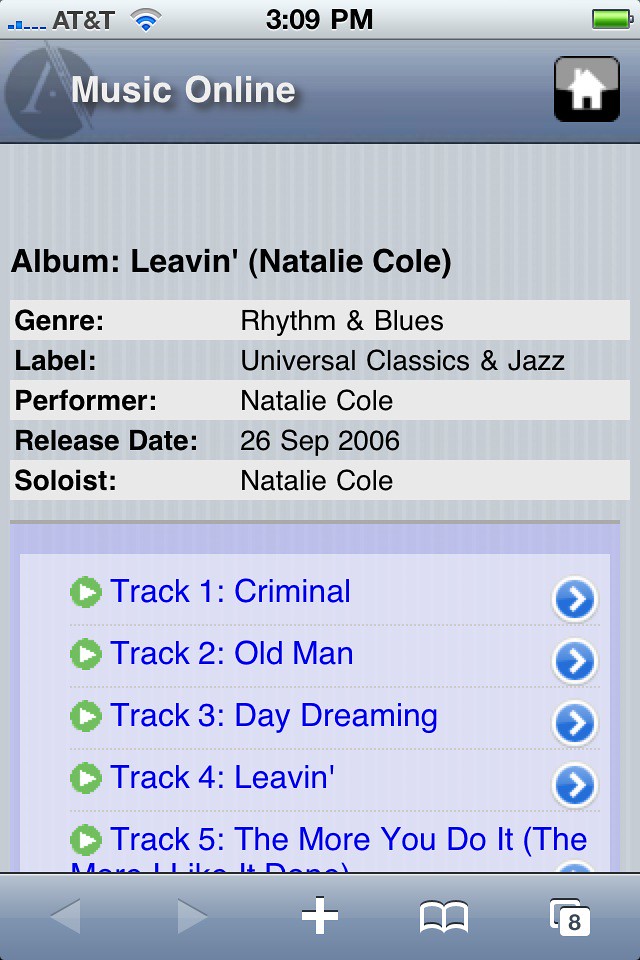
Lastly, this past Friday I discovered (via a tweet to a flickr screen shot) that Alexander Street Press (ASP) had made QR codes available in their Music Online database. I immediately logged into our subscription database, picked an album, found the code, scanned it and was listening to music via a beautiful ASP player on my iPhone 4 in less than two seconds. Below is a screen shot I took to share (with an expired QR code (explanation below), so no legal worries :) ).

I was in my office on our university's wireless system at the time I had logged-in and assumed the music would stop working on my iPhone once I left the office, but that was not the case. After arriving home, I found that I could still listen to the music on my iPhone and at that point I was perplexed as this music was from a subscription database. I continued to experiment with the music database QR codes throughout the weekend.
On Sunday I was searching for information on how the Music Online codes worked when I came upon this Library Journal post"Alexander Street Press, Mobile Streaming Audio, and QR Codes" The article explains that a specific collection of music was being made freely available to all until August 15h. However, the music I chose was not from the free collection and though the article was indeed great exciting news, it did not answer my questions on how/why I could access the subscription databases on my phone without being logged in.
After further searching I found this Alexander Street Press link to a page titled "Using Your Mobile Device" from their Music Online database. Included here is the statement "Mobile shortlinks (used to create the QR code) allow you to listen even when outside of institution network, allowing you to listen from your own home. Please note that shortlinks cannot be used outside of your institution network after 48 hours, but will still be usable within it." I verified today that all the links to music I had bookmarked on my iPhone on Friday have indeed expired. I was also able to easily login as a remote user from my home yesterday and once again added a number of album selections to my IPhone.
I'm very pleased and believe that what Alexander Street Press has done with Music Online and QR codes is the type of development that will drive mainstream adoption in libraries. I'm looking forward to what publishers and database vendors and others (including librarians!) will be doing to help make using library content on the go even more feasible and exciting.
How is your library using QR codes? Comments are welcome.
BTW - The QR Code generator I've been using is Kaywa and my current favorite free QR code reader app for iPhone, iPod Touch, Android devices and many more is the i-nigma reader.
Saturday, January 23, 2010
An Early Adopter Librarian's "New Technology for Higher Education" Post
I've been wanting to write a post that looks back on some of the technologies I've been following and involved with the past year. This week my university's CIO, Greg Smith, sent out this invitation to a Google Wave:
Remember I'm not a techie, just an early adopter (and a librarian) who often finds herself in over her head. Also Greg, you state to list what we think is "important or innovative," you didn't state necessarily practical or useful at the moment. Since I tend to feel most passionate about newer technologies that may or may not make it into the mainstream, I'll focus some on those as well (don't worry, I'll leave the really "out there" things out for now).
My practical happening now list:
* ebooks (we've been purchasing and leasing thousands at the GFU library)
* eReaders and, more importantly, ebook reading software for any/every device
* mobile (handheld device) access to everything
* video, video, and more video! And streaming live video like Ustream, Mogulus, etc.
* screencasts
* google apps and all things google
* web-based everything
* our work is in the cloud
* digital repositories
* open access, open source, open education, open content of all kinds
* social networks of all kinds (though these have been around a long time, there are new networks being created regularly and older networks are still evolving. It does appear facebook is used most in higher ed but seems to me more for social purposes than educational. The social network that has been most impactful for me is twitter, though like many things, it's all in how you use the tool.)
Past innovations I use regularly (some considered mainstream and some still not and maybe never will be but still quite useful to me):
* blogs and wikis
* google apps & all things google (google docs, gmail, Sites, analytics, iGoogle, Calendar, YouTube, Wave, mobile, alerts, etc.)
* virtual worlds
* aggregators of all kinds (from social networking aggregators like FriendFeed to RSS news feeds, to iGoogle, netvibe, etc.)
* delicious, diigo or other kinds of social bookmarking sites
The Future (some near, some not too soon and some maybe never :) )
* augmented reality (AR) (already happening but more useful educational application still to come).
Here's a concept video I like on this:
* augmented reality and handheld devices - here's a blog post I wrote on that with several video examples (back before Apple allowed AR apps on their devices, many more avail. now) titled, "Augmented Reality and Handheld Devices-Finally Ready for Mainstream?"
* QR Codes - I believe QR (quick response) codes will soon take off in the USA though they've had a slow start. (Look for QR codes in the library this summer. Here's a photo of a QR code I generated for use in the library to give an idea of just one way these codes can be used (there are many amazing ways, really). This short video on google favorite places shows another use.
* Mixed reality
* browser based virtual worlds for adults (happening now but just barely)
* immersive learning environments of all kinds
* gesture recognition systems (some like project natal below will work on handhelds like Xbox 360)
* project natal (be sure to meet milo if you haven't already)
* spimes and "The Internet of Things (IoT)"
Here's a ReadWriteWeb article on this "IBM and The Internet of Things"
And here's a recent set of posts by RWW tagged with IoT
* And something and someone to watch as this sort of technology if/when developed could turn everything upside down:
All for now but much more to come because we're in the midst of a digital revolution! Exciting times :)
New Technology for Higher Education:I figured this would work for both purposes. I enjoyed participating in that Wave (seemed a good practical use of Wave) and was hoping to easily embed that in my blog but alas Google Wave, which I think has great potential, is still in the early stages of development. The options for embedding into this blog are not currently very simple, instead I will copy and paste what I wrote, including my short intro, and redo the links and embeded videos below:
I am starting a new Wave to gain feedback for my upcoming Lunch & Learn presentation on what is new in Technology. A side benefit of this Wave will be to give a quick glimpse of what Google Wave is. So please respond with your short lists of what you think is important or innovative Technology in Higher Education.
Remember I'm not a techie, just an early adopter (and a librarian) who often finds herself in over her head. Also Greg, you state to list what we think is "important or innovative," you didn't state necessarily practical or useful at the moment. Since I tend to feel most passionate about newer technologies that may or may not make it into the mainstream, I'll focus some on those as well (don't worry, I'll leave the really "out there" things out for now).
My practical happening now list:
* ebooks (we've been purchasing and leasing thousands at the GFU library)
* eReaders and, more importantly, ebook reading software for any/every device
* mobile (handheld device) access to everything
* video, video, and more video! And streaming live video like Ustream, Mogulus, etc.
* screencasts
* google apps and all things google
* web-based everything
* our work is in the cloud
* digital repositories
* open access, open source, open education, open content of all kinds
* social networks of all kinds (though these have been around a long time, there are new networks being created regularly and older networks are still evolving. It does appear facebook is used most in higher ed but seems to me more for social purposes than educational. The social network that has been most impactful for me is twitter, though like many things, it's all in how you use the tool.)
Past innovations I use regularly (some considered mainstream and some still not and maybe never will be but still quite useful to me):
* blogs and wikis
* google apps & all things google (google docs, gmail, Sites, analytics, iGoogle, Calendar, YouTube, Wave, mobile, alerts, etc.)
* virtual worlds
* aggregators of all kinds (from social networking aggregators like FriendFeed to RSS news feeds, to iGoogle, netvibe, etc.)
* delicious, diigo or other kinds of social bookmarking sites
The Future (some near, some not too soon and some maybe never :) )
* augmented reality (AR) (already happening but more useful educational application still to come).
Here's a concept video I like on this:
* augmented reality and handheld devices - here's a blog post I wrote on that with several video examples (back before Apple allowed AR apps on their devices, many more avail. now) titled, "Augmented Reality and Handheld Devices-Finally Ready for Mainstream?"
* QR Codes - I believe QR (quick response) codes will soon take off in the USA though they've had a slow start. (Look for QR codes in the library this summer. Here's a photo of a QR code I generated for use in the library to give an idea of just one way these codes can be used (there are many amazing ways, really). This short video on google favorite places shows another use.
* Mixed reality
* browser based virtual worlds for adults (happening now but just barely)
* immersive learning environments of all kinds
* gesture recognition systems (some like project natal below will work on handhelds like Xbox 360)
* project natal (be sure to meet milo if you haven't already)
* spimes and "The Internet of Things (IoT)"
Here's a ReadWriteWeb article on this "IBM and The Internet of Things"
And here's a recent set of posts by RWW tagged with IoT
* And something and someone to watch as this sort of technology if/when developed could turn everything upside down:
All for now but much more to come because we're in the midst of a digital revolution! Exciting times :)
Subscribe to:
Posts (Atom)