The last few years have seen a good amount of focus and research on mobile in libraries and education in general. In the last couple of years social in libraries and education has also been picking up steam.
I'm including a couple of my presentations from 2012 below on these two topics.
What I'm especially excited about of late is Google+ Hangouts, (see slide 24-36 in presentation below). What may be of specific interest to librarians/educators like myself, who work with students and colleagues in ways other than face-to-face, is referenced in slides 29-33. (For those not familiar with Google+ Hangouts, it is arguably the most popular feature of Google+, Google's social networking platform and more.)
Bottom line, in the same way that twitter has become my single most valuable professional development tool over the years, though I was skeptical at first, I'm hopeful that Google+ Hangouts will make certain aspects of my job a little easier. At the same time I hope to be able to provide superior research help to students online using this tool.
Tomorrow I lead a reference tips session at our weekly librarian's meeting on the main campus, which will be all about Hangouts. This Saturday I'll be teaching my second library research class to students in another state via Google+ Hangouts (you can read about my first session here, from back when it was named G+ Hangouts with Extras). A week ago I joined our librarian's meeting on the main campus for the first time from my Portland office with positive results and will continue to attend at least one meeting a month using this tool. There'll be another blog post here soon focused on Google+ and Hangouts with some entertaining screenshots so stay tuned if this topic is of interest.
Are you using Google+ or G+ Hangouts at your library? Are you an educator using Google+ Hangouts for office hours or in any other way? I'd love to hear about what others are doing with mobile and/or social, feel free to share in comments.
I'll end with a quote that resonates with me as I continue to follow mobile and emerging technologies "The most important thing we can do is to ensure that when the technology matures, we are ready to deliver content to it." -Jason Griffey, Head of Library Information Technology at the University of Tennessee and author of Mobile Technologies and Libraries.
Showing posts with label emerging technologies. Show all posts
Showing posts with label emerging technologies. Show all posts
Thursday, October 18, 2012

Friday, March 25, 2011
QR Codes and The Academy

(click image for clarity)
A while back I read a post titled "QR Codes Everywhere But Higher Ed?" by Mike Richwalsky (@mrichwalsky). I noticed Mr. Richwalsky also wrote a post back in February 2009 titled "QR Codes: Is it Time?" so he's been tracking these codes for a while.
I've had similar thoughts about QR Codes. And, like others, we've been slowly implementing the codes in our university library. Recently our marketing department created a nice promotional card for our new mobile library site, which included a QR Code for easy access (incl in flickr set below). Overall, higher ed has been slow to adopt QR codes, but based on the number of conferences and presentations featuring this simple technology, that may be changing.
I've seen QR codes in our Best Buy and a few other stores, and there is a definite increase in our local newspapers and mailers, but QR codes are still not a mainstream technology in Portland, Oregon USA. I'm not sure why, though I have some theories (another post). And the majority of people I know (other than early adopter librarians and techies) still don't know what they are.
At times I wonder if QR codes will ever mainstream in North America, and lately I've decided that for some purposes, I don't think that it matters.
Institutions of higher education and libraries (public and academic) are places that I believe can benefit from using QR codes even if they never mainstream, at least for now. Simply put, they are a low threshold technology that provide a lot of bang for the buck. In some cases I think we could ask ourselves why we wouldn't use a QR code. I'm not saying let's start blanketing our libraries and campuses with QR codes, but a QR code on a mobile website promotional card, in a university brochure, and various other places just makes sense to me.
I've embedded my most recent presentation on QR codes below. The presentation includes examples of how QR codes are being used in libraries, with publishers, vendors, retailers, and popular culture.
An article titled "7 ways higher education can use QR codes to connect with current and prospective students" has ideas to assist those in higher ed in getting started.
The Arboretum - Next Generation of Learning blog from the University of Oregon has a number of QR code posts worth reading by Robert Hill Long (who recently found and kindly posted my QR code article). Mr. Long has some great ideas for implementing QR codes in higher ed, and I suspect there will be more posts to come.
Below is a YouTube video on QR Codes at the University of Guelph:
I've embedded a new flickr set dedicated to QR codes and the academy which I'll be adding to as I discover more:
And finally, A press release on the journal NEUROSURGERY® titled "Medical Journal Using QR Codes to Link Print and Digital Video" includes a QR code (which is also on the cover of their April 2011, Vol 68, issue 4 publication). When scanned or photographed, that particular QR code takes users to one of the clearest QR Code tutorials I've seen yet. For those who don't yet use QR codes, I'll include the youtube video of the tutorial below:
I'd love to gather more examples of QR codes related to higher education. Please feel free to recommend links to information or images in comments.
Tuesday, February 22, 2011
QR Codes, Augmented Reality & Future Realities
I recently presented on QR codes and augmented reality at a face-to-face conference, Online NW 2011 (#onw11) using video I converted and added to iTunes to tell the story. I added the corresponding youtube links to slides so people who weren't in attendance could view, and I've embedded that slide presentation of links and titles below.
My slides for the #hhlib conference are more visual as I'll only be able to show four or five videos at most. In the short time since the last conference there have been quite a few developments as QR codes and AR are evolving rapidly. During my last presentation I ended with a concept video from two years ago by Nokia on the future and mixed reality.
Below is another recent commercial concept video that takes us a few steps further. Though I won't be able to show the 5min video during my #hhlib presentation, I've added the link to my slides and I thought I would share the video here. How do you feel about "A Day Made of Glass?" Feel free to share your thoughts in comments.
QR Codes & Augmented Reality For Mobile Library Users - Online NW 2011
I will be presenting on the same topic at the Handheld Librarian IV Online Conference (#hhlib) tomorrow.
View more presentations from Robin Ashford.
My slides for the #hhlib conference are more visual as I'll only be able to show four or five videos at most. In the short time since the last conference there have been quite a few developments as QR codes and AR are evolving rapidly. During my last presentation I ended with a concept video from two years ago by Nokia on the future and mixed reality.
Below is another recent commercial concept video that takes us a few steps further. Though I won't be able to show the 5min video during my #hhlib presentation, I've added the link to my slides and I thought I would share the video here. How do you feel about "A Day Made of Glass?" Feel free to share your thoughts in comments.
Monday, October 25, 2010
Futures Thinking for Academic Librarians
ACRL released a report in June titled, “Futures Thinking for Academic Librarians: Higher Education in 2025.” The goal of the report is "to prompt academic librarians to consider what trends may impact the future of higher education in order to take strategic action now." As a librarian/educator, I wholeheartedly agree that watching trends that may impact our future is important, and I was glad to see this report.
A variety of themes are covered in the report and 26 futuristic scenarios are presented. A survey instrument was developed for the purpose of measuring the probability of a scenario, impact (if the scenario were to occur), speed, and whether a scenario represents a threat or opportunity to academic libraries (for the record, I see most change as an opportunity for academic libraries, just not always business as usual).
One of the four scenarios rated as highest in probability, impact and speed is a scenario titled “Right here with me.” In this scenario students use their handheld devices in almost magical ways. The devices sense information, processes are automated, and more. Reading this reminded me of two newer technologies being used in the US, QR codes and augmented reality, which can seem a bit magical as well. These technologies provide access to information on mobile devices without keying in terms to search.
I’ve been following mobile technology trends for some time (see my first mobile test blog using a simple Motorola RAZR phone and $5. data plan) and I’m a strong believer that the digital revolution we're experiencing will be increasingly mobile. Though I'm uncertain of all that will evolve with mobile technologies in the next 5-15 years, QR codes and augmented reality are two mobile technologies that could have a strong impact in libraries and higher education. In the case of QR codes, I think sooner rather than later as early adopters in the U.S. are currently exploring and implementing this technology in their libraries, on campus, and beyond.
This week I'll attend the ACRL-Oregon & Washington Fall Conference 2010. The title, "If we knew today what we'll know tomorrow: Futures thinking for academic libraries," has me excited about learning from others who value looking forward.
I'll be presenting a five minute lightening talk at the ACRL OR/WA conference using the presentation below. This slideshow compliments an article, which will be available in the November publication of C&RL News on QR codes and mobile users. (Update: C&RL News article is now available.)
All posts tagged with "augmented reality"
A variety of themes are covered in the report and 26 futuristic scenarios are presented. A survey instrument was developed for the purpose of measuring the probability of a scenario, impact (if the scenario were to occur), speed, and whether a scenario represents a threat or opportunity to academic libraries (for the record, I see most change as an opportunity for academic libraries, just not always business as usual).
One of the four scenarios rated as highest in probability, impact and speed is a scenario titled “Right here with me.” In this scenario students use their handheld devices in almost magical ways. The devices sense information, processes are automated, and more. Reading this reminded me of two newer technologies being used in the US, QR codes and augmented reality, which can seem a bit magical as well. These technologies provide access to information on mobile devices without keying in terms to search.
I’ve been following mobile technology trends for some time (see my first mobile test blog using a simple Motorola RAZR phone and $5. data plan) and I’m a strong believer that the digital revolution we're experiencing will be increasingly mobile. Though I'm uncertain of all that will evolve with mobile technologies in the next 5-15 years, QR codes and augmented reality are two mobile technologies that could have a strong impact in libraries and higher education. In the case of QR codes, I think sooner rather than later as early adopters in the U.S. are currently exploring and implementing this technology in their libraries, on campus, and beyond.
This week I'll attend the ACRL-Oregon & Washington Fall Conference 2010. The title, "If we knew today what we'll know tomorrow: Futures thinking for academic libraries," has me excited about learning from others who value looking forward.
I'll be presenting a five minute lightening talk at the ACRL OR/WA conference using the presentation below. This slideshow compliments an article, which will be available in the November publication of C&RL News on QR codes and mobile users. (Update: C&RL News article is now available.)
Qr Codes & Simple Augmented Reality in Academic Libraries
All posts tagged with "QR Codes"
View more presentations from Robin Ashford.
All posts tagged with "augmented reality"
Thursday, October 21, 2010
Exploring Augmented Reality Apps on iPhone 4
I've been fascinated by augmented reality (AR) for a while and have posted in the past (scroll) on this technology as it relates to education. Many feel the potential of AR is huge, though for various reasons it will take time to mainstream.
The Gartner's 2010 Hype Cycle shows AR has 5-10 years to mainstream adoption. The 2010 Horizon Report, commonly used by educators to scan the landscape of emerging technologies for teaching and learning, has listed Simple Augmented Reality Time-to-Adoption: Two to Three Years.
I've long had an interest in testing AR but my previous iPhone 3 (not 3GS) did not have the built in technology necessary to use AR. In most cases, handheld devices must have a compass and GPS to be able to use AR. The flickr set below shows examples of AR app tests on my iPhone 4, which I've been running mostly in downtown Portland, Oregon, USA. The set and descriptions can also be viewed on flickr
I'm excited about what I'm learning as I test AR apps in the city. I see challenges after using these apps, but the potential has become more clear as well. I'm also encouraged by the fact that there are smart people working on moving this tech forward. O'Reilly radar recently posted a good article titled "How augmented reality apps can catch on" and there are creative thinkers/innovators in higher education working on practical uses for teaching and learning.
For now, my plan is to keep testing and I hope to soon find someone at my university interested enough to collaborate with me on creating an AR tour of our campus and main library. Seems like a good first step. I've seen a few examples of how a handful of higher ed institutions are beginning to use AR. I'd love to learn of more. Comments are most welcome.
The Gartner's 2010 Hype Cycle shows AR has 5-10 years to mainstream adoption. The 2010 Horizon Report, commonly used by educators to scan the landscape of emerging technologies for teaching and learning, has listed Simple Augmented Reality Time-to-Adoption: Two to Three Years.
I've long had an interest in testing AR but my previous iPhone 3 (not 3GS) did not have the built in technology necessary to use AR. In most cases, handheld devices must have a compass and GPS to be able to use AR. The flickr set below shows examples of AR app tests on my iPhone 4, which I've been running mostly in downtown Portland, Oregon, USA. The set and descriptions can also be viewed on flickr
I'm excited about what I'm learning as I test AR apps in the city. I see challenges after using these apps, but the potential has become more clear as well. I'm also encouraged by the fact that there are smart people working on moving this tech forward. O'Reilly radar recently posted a good article titled "How augmented reality apps can catch on" and there are creative thinkers/innovators in higher education working on practical uses for teaching and learning.
For now, my plan is to keep testing and I hope to soon find someone at my university interested enough to collaborate with me on creating an AR tour of our campus and main library. Seems like a good first step. I've seen a few examples of how a handful of higher ed institutions are beginning to use AR. I'd love to learn of more. Comments are most welcome.
Thursday, August 5, 2010
An Educational Augmented Reality Project
Those who follow me know that I'm an early adopter drawn to emerging technologies. As an educator I'm always on the look-out for educational applications of these technologies.
I've been fascinated by augmented reality (AR) for a couple of years now. Many of my AR blog posts have featured AR concepts that may or may not come to pass. A lack of standards and other issues means it will be a while before AR is ready for mainstream.
The video embedded below describes an educational AR project that sounds useful and doable. I also found it personally worth supporting.
One of the things I especially appreciate about this project is that the educators involved realize that not everyone will have heard of AR, and many will not personally possess the required hardware. They are proposing a project that would engage students in valuable learning activities and provide ways to make the technology available to those who have never heard of AR, don't have a device of their own, but who could still benefit.
Read about this kickstarter project, "The Civil War Augmented Reality Project," watch the video, and see if you agree. If you do, please consider supporting if possible.
For those new to AR, below is a two min. video introduction to AR
I've been fascinated by augmented reality (AR) for a couple of years now. Many of my AR blog posts have featured AR concepts that may or may not come to pass. A lack of standards and other issues means it will be a while before AR is ready for mainstream.
The video embedded below describes an educational AR project that sounds useful and doable. I also found it personally worth supporting.
One of the things I especially appreciate about this project is that the educators involved realize that not everyone will have heard of AR, and many will not personally possess the required hardware. They are proposing a project that would engage students in valuable learning activities and provide ways to make the technology available to those who have never heard of AR, don't have a device of their own, but who could still benefit.
Read about this kickstarter project, "The Civil War Augmented Reality Project," watch the video, and see if you agree. If you do, please consider supporting if possible.
For those new to AR, below is a two min. video introduction to AR
Sunday, July 11, 2010
QR Codes in Libraries

QR Codes are appearing more frequently in the U.S., though the technology is still largely unknown to the majority and mainstream adoption will take time. Recent developments are raising awareness of QR codes in the country (UPDATE 7/29 more major QR code exposure), and librarians in libraries everywhere are busy experimenting, learning from each other and sharing results.
I created an introductory flier to share with students and faculty as we continue to research and brainstorm ways to utilize QR codes in the library and on campus.
The Portland Center of my university, where I work as a reference librarian, serves primarily graduate and doctoral students. They are busy adults, many with families working full-time jobs while attending graduate school. Any new technology that is introduced must have enough value to warrant their time and effort. Because QR Code technology is very simple to use, I think there is a good chance of seeing this technology utilized IF doing so makes their lives easier (i.e., QR codes on study room doors to take users directly to the room reservation online form can save time and effort). The main undergraduate campus library has also introduced QR codes and it will be interesting to observe usage between the different groups.
The Journal of Information Literacy recently published an article by Andrew Walsh titled, "QR Codes – using mobile phones to deliver library instruction and help at the point of need." From the Abstract:
This article outlines the practical uses we have found for QR codes, gives preliminary results of how those have been received by our library users in our pilot study and highlights the reluctance of many students to engage with this technology, which may need further investigation.It's a worthwhile read from which we can learn a great deal, but keep in mind the research was done close to a year ago and there have been significant changes since that time. Many of the same challenges exist today, especially in the U.S. where we are lagging in the use of QR codes and other mobile technologies. However, awareness of QR codes is growing in the US, and QR code technology has developed greatly the last few months in both quantity and quality of apps. I've personally culled a number of apps as better apps have been made available (no longer is taking a picture necessary on some devices as newer apps quickly and accurately scan the codes).
The author also mentions that QR codes are "an easier alternative to full augmented reality," and I agree. However, augmented reality is another technology that has seen significant development over the past few months. I've been experimenting with augmented reality (AR) apps, which I hope to utilize for library tours and other purposes (blog post to come - done and here). At the moment (until the next new technology) I feel that both QR codes and AR will have a place in the library and the university. This post on augmented reality and handheld devices from a year ago highlights the different amazing apps at that time and I expect to continue to see gains in AR and QR code development.
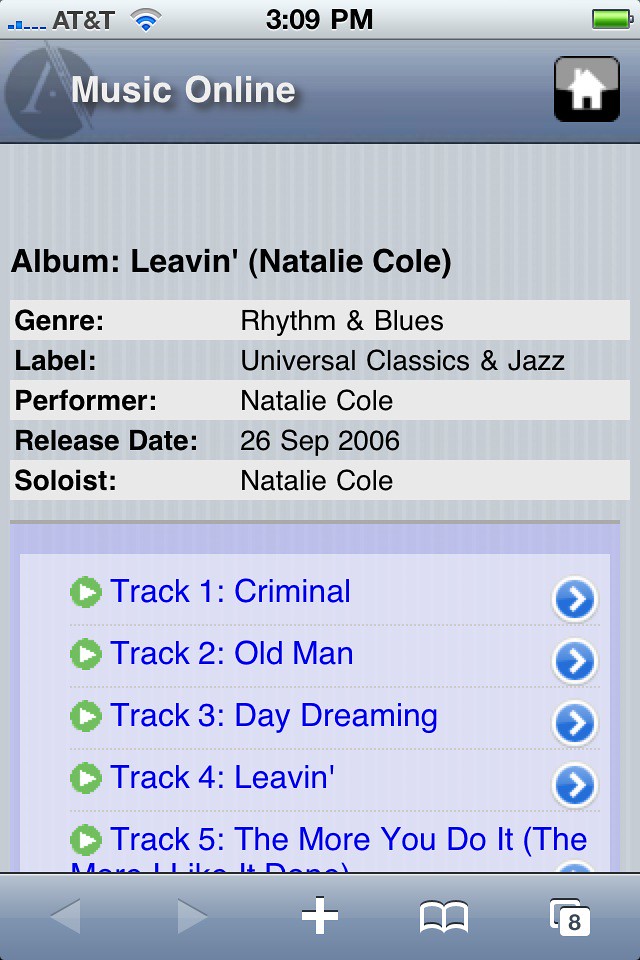
Lastly, this past Friday I discovered (via a tweet to a flickr screen shot) that Alexander Street Press (ASP) had made QR codes available in their Music Online database. I immediately logged into our subscription database, picked an album, found the code, scanned it and was listening to music via a beautiful ASP player on my iPhone 4 in less than two seconds. Below is a screen shot I took to share (with an expired QR code (explanation below), so no legal worries :) ).

I was in my office on our university's wireless system at the time I had logged-in and assumed the music would stop working on my iPhone once I left the office, but that was not the case. After arriving home, I found that I could still listen to the music on my iPhone and at that point I was perplexed as this music was from a subscription database. I continued to experiment with the music database QR codes throughout the weekend.
On Sunday I was searching for information on how the Music Online codes worked when I came upon this Library Journal post"Alexander Street Press, Mobile Streaming Audio, and QR Codes" The article explains that a specific collection of music was being made freely available to all until August 15h. However, the music I chose was not from the free collection and though the article was indeed great exciting news, it did not answer my questions on how/why I could access the subscription databases on my phone without being logged in.
After further searching I found this Alexander Street Press link to a page titled "Using Your Mobile Device" from their Music Online database. Included here is the statement "Mobile shortlinks (used to create the QR code) allow you to listen even when outside of institution network, allowing you to listen from your own home. Please note that shortlinks cannot be used outside of your institution network after 48 hours, but will still be usable within it." I verified today that all the links to music I had bookmarked on my iPhone on Friday have indeed expired. I was also able to easily login as a remote user from my home yesterday and once again added a number of album selections to my IPhone.
I'm very pleased and believe that what Alexander Street Press has done with Music Online and QR codes is the type of development that will drive mainstream adoption in libraries. I'm looking forward to what publishers and database vendors and others (including librarians!) will be doing to help make using library content on the go even more feasible and exciting.
How is your library using QR codes? Comments are welcome.
BTW - The QR Code generator I've been using is Kaywa and my current favorite free QR code reader app for iPhone, iPod Touch, Android devices and many more is the i-nigma reader.
Thursday, December 17, 2009
What Matters Now - Excellent Free Ebook
Many extraordinary authors and thinkers contributed to this ebook. It's a quick read but I've been purposefully reading slowly, trying to assimilate the nuggets of wisdom within the pixels. It's inspiring, helping me to think and gain perspective. This free ebook has been organized by the always inspirational, Seth Godin, here's his blog post on this. It's worth sharing so for those of you not following me on twitter I've embedded it below and include the download link.
What Matters Now
What Matters Now
Sunday, July 12, 2009
Augmented Reality & Handheld Devices-Finally Ready for Mainstream?

I've been following and posting about augmented reality on twitter a fair amount lately. (Click to enlarge photo.)
Augmented reality (AR) has been developing for many years. Now that AR and handheld devices have evolved, we'll be able to benefit from both in new and practical ways. This is an exciting time with wonderful possibilities. This recent New York Times article states (free login), "Once the stuff of science fiction, augmented reality is now also making its way to smartphones, thanks to advances in both hardware and software."
The video below is one of the first examples I saw of practical AR on a handheld device. Here is a recent report on further developments related to the Wikitude app below. Google's Android has been ahead of Apple's iPhone when it comes to AR. I'm hopeful Apple will catch up. There's no shortage of developers working on iPhone apps in this area, that's for sure.
Augmented reality is pretty amazing and I believe this is just the beginning of what we're going to see with AR on handheld devices. The educational applications for this are limitless. And once Apple grants access to the video API, I'm hopeful the iPhone 3GS will catch up.
And soon Layar will be available beyond the Netherlands for phones running on the Android operating system. Again, an iPhone version of this will be a must.
The newest AR iPhone video to hit Youtube has stirred further interest in the U.S.
Yesterday on twitter @loic (Loic Le Meur of Seesmic) claimed this was a fake. Here's his tweet, which was retweeted by a few others.
"augmented reality on your iphone (yeah, it's a fake but watch it anyway) http://bit.ly/BT49Q "
From what I can tell it's not fake, though it's not yet available in the app store. But it may not be all it appears to be, not yet. Here's a review that talks about the good and bad of the app (written after the first London version video was released).
BTW- @angusdav did reply to "@loic why do you think the acrossair apps are fake? they say they're in the app store approval queue. http://bit.ly/rM55I"
I was a bit shocked by the @loic reply "@angusdav is it not a fake? It looks so amazing that I thought it was!!!"
I've just scratched the surface on this topic. Google "augmented reality" and you'll see that there's a ton of info out there and many more exciting developments in the works. Here is a video blogger who does a nice job showing and explaining some of the AR progression. Since that video was done in March 2009 it doesn't contain the work recently released by Georgia Tech (be sure to scroll & watch that video!).
And regarding the Apple iPhone and the API controversy? - I just ran a quick search and found this: Open Letter to Apple: Let us Augment Reality with the iPhone! (Turns out it contains the videos I included here and more!)
One last additional link here-check out this awesome augmented reality business card.
So what do you think, is it time? Will this technology have much impact in our lives?
Tuesday, June 10, 2008
Virtual Worlds About To Explode?!
I ran across something new recently. I've been having trouble believing some of the stats out there on virtual worlds (VW), especially those that show users close to a billion in the near future. Partly it has to do with the definition of VWs.
Check out ExitReality. (Note: if you have a mac computer you will be disappointed to learn that you currently can not run this on a mac.) Take a look at the sites that ExitReality is currently compatible with. I have a mac so could not run this yet on a computer, but I was able to find some flickr screenshots on this as well as what's found on the ExitReality site.
The reason this is of interest to me is because I have been wondering how VWs were going to hit the mainstream. Until I saw ExitReality, I figured the numbers would grow from the growing gaming/virtual world maket. The virtual worlds for kids market is projected to see especially strong growth.
If ExitReality takes off with facebook, bebo, MySpace, etc. users, virtual world user numbers will explode. Or will they? Could new technologies like this, which the ExitReality site calls an "enhanced 3D, multi-user, immersive messaging environment" end up taking away from the heavy duty VWs like SL? Or will VWs become more like these 3D environments. Sort of a Second Life lite version, without all the crashes and steep learning curve? Time will tell.
The other 3D technology I recently discovered is weblin (again, not yet with a mac, though you can visit sites where other weblin avatars are hanging out using weblin lite). Or check out this short YouTube demo. I'm less sure about this, but the fact that one can have their avatar on any website where you meet and interact with other avatars is fascinating to me. I really just discovered this one last night and went from the weblin site to YouTube and watched the weblins hanging out there. I was pretty amazed. Again, I'm talking about this in the context of virtual worlds/avatars (3D) entering the mainstream and eventually becoming ubiquitous.
On the Second Life Educator's Listserve (SLED), there have been more postings recently on interoperability amongst virtual worlds. This will be important for growth in the true VWs. After looking at ExitReality and weblin, I pictured my SL avatar teleporting from SL to Wonderland to Croquet, and maybe sooner than I thought.
What do you think? Are these fads that will disappear? Is this a trend that's here to stay and can we expect even more surprises related to virtual worlds and 3D environments in the near future? I believe we will see some amazing things. I'm not at all sure what virtual worlds (3D) will look like or how they will work in the future, but I believe they are here to stay...in some form or another.
Check out ExitReality. (Note: if you have a mac computer you will be disappointed to learn that you currently can not run this on a mac.) Take a look at the sites that ExitReality is currently compatible with. I have a mac so could not run this yet on a computer, but I was able to find some flickr screenshots on this as well as what's found on the ExitReality site.
The reason this is of interest to me is because I have been wondering how VWs were going to hit the mainstream. Until I saw ExitReality, I figured the numbers would grow from the growing gaming/virtual world maket. The virtual worlds for kids market is projected to see especially strong growth.
If ExitReality takes off with facebook, bebo, MySpace, etc. users, virtual world user numbers will explode. Or will they? Could new technologies like this, which the ExitReality site calls an "enhanced 3D, multi-user, immersive messaging environment" end up taking away from the heavy duty VWs like SL? Or will VWs become more like these 3D environments. Sort of a Second Life lite version, without all the crashes and steep learning curve? Time will tell.
The other 3D technology I recently discovered is weblin (again, not yet with a mac, though you can visit sites where other weblin avatars are hanging out using weblin lite). Or check out this short YouTube demo. I'm less sure about this, but the fact that one can have their avatar on any website where you meet and interact with other avatars is fascinating to me. I really just discovered this one last night and went from the weblin site to YouTube and watched the weblins hanging out there. I was pretty amazed. Again, I'm talking about this in the context of virtual worlds/avatars (3D) entering the mainstream and eventually becoming ubiquitous.
On the Second Life Educator's Listserve (SLED), there have been more postings recently on interoperability amongst virtual worlds. This will be important for growth in the true VWs. After looking at ExitReality and weblin, I pictured my SL avatar teleporting from SL to Wonderland to Croquet, and maybe sooner than I thought.
What do you think? Are these fads that will disappear? Is this a trend that's here to stay and can we expect even more surprises related to virtual worlds and 3D environments in the near future? I believe we will see some amazing things. I'm not at all sure what virtual worlds (3D) will look like or how they will work in the future, but I believe they are here to stay...in some form or another.
Saturday, May 3, 2008
What is Second Life?
Last week two people told me they had never heard of Second Life, nor the phrase "virtual worlds." So for those who are not familiar with Second Life, the link to the video below is the best introduction I have found thus far.
The first-ever Congressional hearing on virtual worlds took place on April 1, 2008 in Washington, D.C. Linden Lab® CEO Philip Rosedale testified before the House Subcommittee on Telecommunications and the Internet.
"Second Life®: Making the Real World a Better Place" is the title of this 7 minute professionally produced video that Rosedale showed at the hearing. Some will say Rosedale is idealistic, while others will argue that he sees and understands the potential of innovation and imagination. What do you think?
The first-ever Congressional hearing on virtual worlds took place on April 1, 2008 in Washington, D.C. Linden Lab® CEO Philip Rosedale testified before the House Subcommittee on Telecommunications and the Internet.
"Second Life®: Making the Real World a Better Place" is the title of this 7 minute professionally produced video that Rosedale showed at the hearing. Some will say Rosedale is idealistic, while others will argue that he sees and understands the potential of innovation and imagination. What do you think?
Monday, February 11, 2008
Horizon Report 2008 - Future of Higher Education
I recently downloaded the 2008 Horizon Report. The report is a collaboration between The New Media Consortium and the eduCause Learning initiative. If you're interested in the future of higher education you will want to read this.
According to EDUCAUSE President Diana Oblinger, “The Horizon Report helps all of us put emerging technologies in perspective—what might be useful, what might be further in the future—and links it to learning."
The six selected areas for 2008: grassroots video, collaboration webs, mobile broadband, data mashups, collective intelligence, and social operating systems.
The 32-page 2008 Horizon Report is free and has been released with a Creative Commons license to facilitate its widespread use, easy duplication, and broad distribution. The report can be accessed along with all five previous Horizon Reports from this great Horizon Project Wiki, 2008 edition.
Librarians and IT workers in higher ed will want to be sure that decision makers at their institutions are aware of this report. In the increasingly competitive higher education environment, keeping abreast of these emerging technologies is more important than ever.
According to EDUCAUSE President Diana Oblinger, “The Horizon Report helps all of us put emerging technologies in perspective—what might be useful, what might be further in the future—and links it to learning."
The six selected areas for 2008: grassroots video, collaboration webs, mobile broadband, data mashups, collective intelligence, and social operating systems.
The 32-page 2008 Horizon Report is free and has been released with a Creative Commons license to facilitate its widespread use, easy duplication, and broad distribution. The report can be accessed along with all five previous Horizon Reports from this great Horizon Project Wiki, 2008 edition.
Librarians and IT workers in higher ed will want to be sure that decision makers at their institutions are aware of this report. In the increasingly competitive higher education environment, keeping abreast of these emerging technologies is more important than ever.
Subscribe to:
Posts (Atom)