Tuesday, February 22, 2011

QR Codes, Augmented Reality & Future Realities

I recently presented on QR codes and augmented reality at a face-to-face conference, Online NW 2011 (#onw11) using video I converted and added to iTunes to tell the story. I added the corresponding youtube links to slides so people who weren't in attendance could view, and I've embedded that slide presentation of links and titles below.
I will be presenting on the same topic at the Handheld Librarian IV Online Conference (#hhlib) tomorrow.

My slides for the #hhlib conference are more visual as I'll only be able to show four or five videos at most. In the short time since the last conference there have been quite a few developments as QR codes and AR are evolving rapidly. During my last presentation I ended with a concept video from two years ago by Nokia on the future and mixed reality.

Below is another recent commercial concept video that takes us a few steps further. Though I won't be able to show the 5min video during my #hhlib presentation, I've added the link to my slides and I thought I would share the video here. How do you feel about "A Day Made of Glass?" Feel free to share your thoughts in comments.

Wednesday, February 9, 2011

Mobile Impact - Libraries & Higher Education

The ECAR (EDUCAUSE Center for Applied Research) Study of Undergraduate Students and Information Technology, 2010 was released in October along with the Key Findings (PDF bottom left).
“The ECAR Study of Undergraduate Students and Information Technology, 2010 is a longitudinal extension of the annual 2004 through 2009 studies. It is based on quantitative data from a spring 2010 survey of 36,950 freshmen and seniors at 100 four-year institutions and students at 27 two-year institutions; student focus groups that included input from 84 students at 4 institutions; and review of qualitative data from written responses to open-ended questions.”

In preparation for two upcoming presentations related to mobile technologies in libraries, I've been following statistics on cell phones, feature phones, smartphones, and other handheld devices (i.e., iPod Touch, etc.) in the US and abroad. Page five of the ECAR Study Key Findings contains "Figure 2. Internet-Capable Handheld Device Users, 2009 and 2010," and the statistics clearly indicate exponential growth.

In viewing the charts in Figure 2 of the Key Findings, I found it significant that the percentage of those in the study who own Internet-capable devices jumped from 51.2% in 2009 to 62.7% in 2010. However, what really grabbed my attention were the stats that show the change in how students are using these devices, with 33.1% who own and use the Internet on their device in 2009 to 48.8% in 2010. That 15.7% increase in Internet use, with almost half the students using their handheld devices to access the Internet (likely over 50% by now), is what is bringing us in higher education and libraries to a tipping point. And the momentum is clearly growing outside of higher education as well (see yesterday’s report from Financial Times on smartphone growth).

Every student I’ve asked recently has said they will probably purchase a mobile device with Internet access soon (or have the data plan on their existing phone turned on) because it is finally becoming affordable (along with the allure of apps-see video below). With the fierce competition amongst carriers, data plans are dropping (T-Mobile is aggressively marketing fast 4G and “entry-level data plans that start at $10”). If costs remains low, my guess is that the number of students accessing the Internet on their handheld devices in next year’s ECAR report will show an even greater percentage of increase.

What does this men? What kind of impact will mobile devices have in higher education? I’m still not sure, but I’m paying close attention. As an academic librarian I’m interested in learning how we can leverage the technology available to us to better serve our students with computers in their pockets. As the proliferation of Internet accessible mobile devices continues (remember most US college campuses are completely wireless, and those who can’t afford data plans are often able to purchase the iPod Touch, which on wireless almost equates to an iPhone), I want to be ready.

Forward looking librarians are already on it. Take a look at the upcoming Handheld Librarian Online Conference IV. View the topics and issues being covered, and the ways in which innovative librarians are working to serve their mobile constituents. The program includes trends in mobile technology and features many ways librarians are utilizing mobile, everything from SMS and mobile instruction, to QR codes, augmented reality and more.

I hope to learn a great deal while attending the Handheld Librarian IV conference. Librarian roles are changing, and whether in public or academic libraries, I believe mobile technology and librarians who understand mobile user needs, will become increasingly more important.

Lastly, below is an amazing entertaining video that drives home the fact that indeed “The Times They Are A-Changin”


Monday, October 25, 2010

Futures Thinking for Academic Librarians

ACRL released a report in June titled, “Futures Thinking for Academic Librarians: Higher Education in 2025.” The goal of the report is "to prompt academic librarians to consider what trends may impact the future of higher education in order to take strategic action now." As a librarian/educator, I wholeheartedly agree that watching trends that may impact our future is important, and I was glad to see this report.

A variety of themes are covered in the report and 26 futuristic scenarios are presented. A survey instrument was developed for the purpose of measuring the probability of a scenario, impact (if the scenario were to occur), speed, and whether a scenario represents a threat or opportunity to academic libraries (for the record, I see most change as an opportunity for academic libraries, just not always business as usual).

One of the four scenarios rated as highest in probability, impact and speed is a scenario titled “Right here with me.” In this scenario students use their handheld devices in almost magical ways. The devices sense information, processes are automated, and more. Reading this reminded me of two newer technologies being used in the US, QR codes and augmented reality, which can seem a bit magical as well. These technologies provide access to information on mobile devices without keying in terms to search.

I’ve been following mobile technology trends for some time (see my first mobile test blog using a simple Motorola RAZR phone and $5. data plan) and I’m a strong believer that the digital revolution we're experiencing will be increasingly mobile. Though I'm uncertain of all that will evolve with mobile technologies in the next 5-15 years, QR codes and augmented reality are two mobile technologies that could have a strong impact in libraries and higher education. In the case of QR codes, I think sooner rather than later as early adopters in the U.S. are currently exploring and implementing this technology in their libraries, on campus, and beyond.

This week I'll attend the ACRL-Oregon & Washington Fall Conference 2010. The title, "If we knew today what we'll know tomorrow: Futures thinking for academic libraries," has me excited about learning from others who value looking forward.

I'll be presenting a five minute lightening talk at the ACRL OR/WA conference using the presentation below. This slideshow compliments an article, which will be available in the November publication of C&RL News on QR codes and mobile users. (Update: C&RL News article is now available.)
All posts tagged with "QR Codes"
All posts tagged with "augmented reality"

Thursday, October 21, 2010

Exploring Augmented Reality Apps on iPhone 4

I've been fascinated by augmented reality (AR) for a while and have posted in the past (scroll) on this technology as it relates to education. Many feel the potential of AR is huge, though for various reasons it will take time to mainstream.

The Gartner's 2010 Hype Cycle shows AR has 5-10 years to mainstream adoption. The 2010 Horizon Report, commonly used by educators to scan the landscape of emerging technologies for teaching and learning, has listed Simple Augmented Reality Time-to-Adoption: Two to Three Years.

I've long had an interest in testing AR but my previous iPhone 3 (not 3GS) did not have the built in technology necessary to use AR. In most cases, handheld devices must have a compass and GPS to be able to use AR. The flickr set below shows examples of AR app tests on my iPhone 4, which I've been running mostly in downtown Portland, Oregon, USA. The set and descriptions can also be viewed on flickr


I'm excited about what I'm learning as I test AR apps in the city. I see challenges after using these apps, but the potential has become more clear as well. I'm also encouraged by the fact that there are smart people working on moving this tech forward. O'Reilly radar recently posted a good article titled "How augmented reality apps can catch on" and there are creative thinkers/innovators in higher education working on practical uses for teaching and learning.

For now, my plan is to keep testing and I hope to soon find someone at my university interested enough to collaborate with me on creating an AR tour of our campus and main library. Seems like a good first step. I've seen a few examples of how a handful of higher ed institutions are beginning to use AR. I'd love to learn of more. Comments are most welcome.

Thursday, August 5, 2010

An Educational Augmented Reality Project

Those who follow me know that I'm an early adopter drawn to emerging technologies. As an educator I'm always on the look-out for educational applications of these technologies.

I've been fascinated by augmented reality (AR) for a couple of years now. Many of my AR blog posts have featured AR concepts that may or may not come to pass. A lack of standards and other issues means it will be a while before AR is ready for mainstream.

The video embedded below describes an educational AR project that sounds useful and doable. I also found it personally worth supporting.

One of the things I especially appreciate about this project is that the educators involved realize that not everyone will have heard of AR, and many will not personally possess the required hardware. They are proposing a project that would engage students in valuable learning activities and provide ways to make the technology available to those who have never heard of AR, don't have a device of their own, but who could still benefit.

Read about this kickstarter project, "The Civil War Augmented Reality Project," watch the video, and see if you agree. If you do, please consider supporting if possible.


For those new to AR, below is a two min. video introduction to AR

Sunday, July 11, 2010

QR Codes in Libraries


QR Codes are appearing more frequently in the U.S., though the technology is still largely unknown to the majority and mainstream adoption will take time. Recent developments are raising awareness of QR codes in the country (UPDATE 7/29 more major QR code exposure), and librarians in libraries everywhere are busy experimenting, learning from each other and sharing results.

I created  an introductory flier to share with students and faculty as we continue to research and brainstorm ways to utilize QR codes in the library and on campus.

The Portland Center of my university, where I work as a reference librarian, serves primarily graduate and doctoral students. They are busy adults, many with families working full-time jobs while attending graduate school. Any new technology that is introduced must have enough value to warrant their time and effort. Because QR Code technology is very simple to use, I think there is a good chance of seeing this technology utilized IF doing so makes their lives easier (i.e., QR codes on study room doors to take users directly to the room reservation online form can save time and effort). The main undergraduate campus library has also introduced QR codes and it will be interesting to observe usage between the different groups.

The Journal of Information Literacy recently published an article by Andrew Walsh titled, "QR Codes – using mobile phones to deliver library instruction and help at the point of need." From the Abstract:
This article outlines the practical uses we have found for QR codes, gives preliminary results of how those have been received by our library users in our pilot study and highlights the reluctance of many students to engage with this technology, which may need further investigation.
It's a worthwhile read from which we can learn a great deal, but keep in mind the research was done close to a year ago and there have been significant changes since that time. Many of the same challenges exist today, especially in the U.S. where we are lagging in the use of QR codes and other mobile technologies. However, awareness of QR codes is growing in the US, and QR code technology has developed greatly the last few months in both quantity and quality of apps. I've personally culled a number of apps as better apps have been made available (no longer is taking a picture necessary on some devices as newer apps quickly and accurately scan the codes).

The author also mentions that QR codes are "an easier alternative to full augmented reality," and I agree. However, augmented reality is another technology that has seen significant development over the past few months. I've been experimenting with augmented reality (AR) apps, which I hope to utilize for library tours and other purposes (blog post to come - done and here). At the moment (until the next new technology) I feel that both QR codes and AR will have a place in the library and the university. This post on augmented reality and handheld devices from a year ago highlights the different amazing apps at that time and I expect to continue to see gains in AR and QR code development.

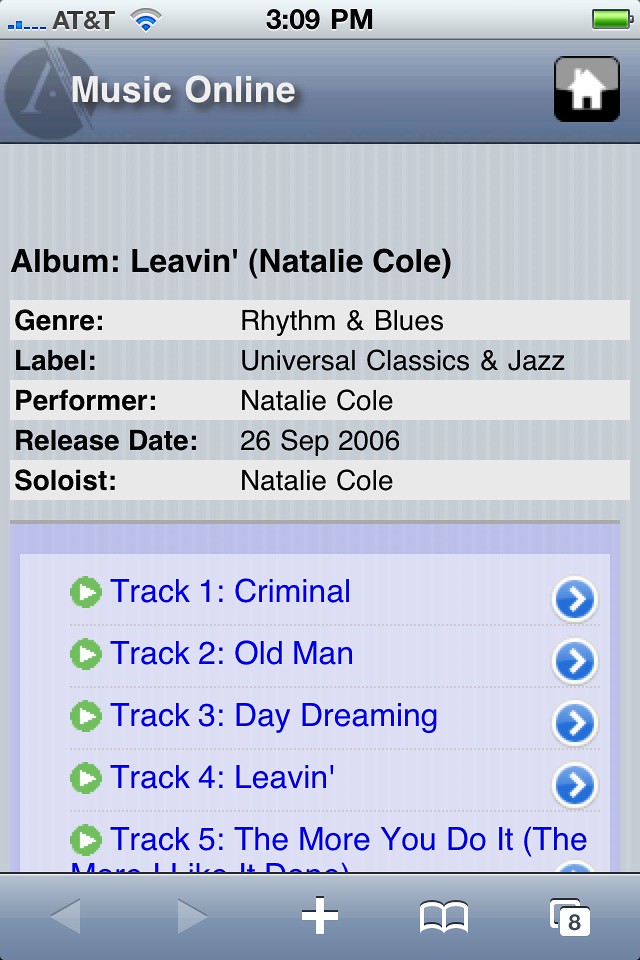
Lastly, this past Friday I discovered (via a tweet to a flickr screen shot) that Alexander Street Press (ASP) had made QR codes available in their Music Online database. I immediately logged into our subscription database, picked an album, found the code, scanned it and was listening to music via a beautiful ASP player on my iPhone 4 in less than two seconds. Below is a screen shot I took to share (with an expired QR code (explanation below), so no legal worries :) ).

Screen shot 2010-07-09 Music Online QR Code

I was in my office on our university's wireless system at the time I had logged-in and assumed the music would stop working on my iPhone once I left the office, but that was not the case. After arriving home, I found that I could still listen to the music on my iPhone and at that point I was perplexed as this music was from a subscription database. I continued to experiment with the music database QR codes throughout the weekend.

On Sunday I was searching for information on how the Music Online codes worked when I came upon this Library Journal post"Alexander Street Press, Mobile Streaming Audio, and QR Codes" The article explains that a specific collection of music was being made freely available to all until August 15h. However, the music I chose was not from the free collection and though the article was indeed great exciting news, it did not answer my questions on how/why I could access the subscription databases on my phone without being logged in.

After further searching I found this Alexander Street Press link to a page titled "Using Your Mobile Device" from their Music Online database. Included here is the statement "Mobile shortlinks (used to create the QR code) allow you to listen even when outside of institution network, allowing you to listen from your own home. Please note that shortlinks cannot be used outside of your institution network after 48 hours, but will still be usable within it." I verified today that all the links to music I had bookmarked on my iPhone on Friday have indeed expired. I was also able to easily login as a remote user from my home yesterday and once again added a number of album selections to my IPhone.

I'm very pleased and believe that what Alexander Street Press has done with Music Online and QR codes is the type of development that will drive mainstream adoption in libraries. I'm looking forward to what publishers and database vendors and others (including librarians!) will be doing to help make using library content on the go even more feasible and exciting.

How is your library using QR codes? Comments are welcome.

BTW - The QR Code generator I've been using is Kaywa and my current favorite free QR code reader app for iPhone, iPod Touch, Android devices and many more is the i-nigma reader.

Wednesday, May 26, 2010

#oilspill

Making a statement (not my typical blog post).

Yesterday PBS Newshour posted Gulf Coast Oil Leak: What Are Your Suggestions? Their ongoing coverage of the Gulf disaster is worth following.

I suppose I could be over-reacting but this seems huge to me. After reading and viewing this photo blog from the Boston Globe yesterday and thinking of long-term ramifications--the human, animal and environmental impact...well, I don't have words to adequately describe my feelings.

More than anything, I'm hoping we can learn from this man-made disaster and take steps toward a future where we refuse to implement technologies with the potential for this type of destruction without a proven plan in place to address problems or what some refer to as "a mistake." Humans make mistakes, we all know that. IMHO we are all responsible for this one.

Update 6/11/10: others feeling responsible...

Google News: The Live Feed for gulf oil spill

(The #oilspill in the title is the twitter hashtag many are using in posts on the oil spill, for those unfamiliar with social media.) Update 6/2010: Many on twitter have switched to #oildisaster Click either for real-time results from those tags on twitter.

My SL and twitter friend @SunnThunders shared this article and I decided to embed the video below. Not sure it's possible for us to reverse our reliance on oil in this country or our world, I'll at least try to do my part in minimizing usage. At this point, it just doesn't feel like enough. Warning: the video is pretty shocking.


Watch full-screen on YouTube

Photo blog UPDATE 6/4/2010: Caught in the Oil (if the first set of photos were too disturbing do NOT click on this link).

Sorry, but feel it's important to add yet another update -
Photo blog UPDATE 6/11/2010: Scenes from the Gulf of Mexico

My final update on this post is the NYTimes "Tracking the Oil Spill in the Gulf." An interactive map (click "play" button upper left of map) and estimates of oil spilled in this disaster.

Friday, April 2, 2010

Why I Want An iPad Anyway


I was both excited and disappointed when I watched the Steve Jobs iPad demonstration along with zillions of others via live blogs and tweets. I thought they were mistaken when I first heard "no flash" and then "no camera" on a live blog. I tweeted "no flash, did I understand that correctly?" and several others said they were sure that couldn't be and were trying to confirm.

It didn't take long to figure out this gorgeous device was primarily for consuming content. As an educator I found this especially disturbing. Surely everyone knows we're a participatory culture now (no, not everyone, actually) - how will we upload our videos to YouTube?!

Since then I've followed the iPad hype on twitter, read many articles and blog posts, and watched plenty of videos about the iPad and iPad content. People are definitely passionate about this device. Some reviews have been critical, others say it's going to change the world.

After stepping back from my self and my personal technology habits, I'm in the camp that this device will be a game changer. I see it as the beginning of a new era. A move from files and folders to apps and the cloud. This makes sense to me as I've had most of my data in the cloud since the first Google Apps existed and I'm a believer. And the Apps! iPhone apps have been blowing my mind lately, I can only imagine the amazing developments to come in new iPad apps within the year.

PCMag: Apple iPad video review from PCMag.com Reviews on Vimeo.

It's not yet an ideal device for someone like myself, not a techie but an early adopter who likes to create, but a game changer nonetheless.

I'm planning to wait until V2 of the iPad for myself, when I'm pretty sure the camera situation and a few other things will have changed (ability to create and edit google docs please!). I'll have plenty of opportunities to get my hands on iPads before then, and I believe I've convinced my library director to let me pick one up to run e-book tests on very soon. BTW - the iBook demo in the video is nice and I expect there will be some truly innovative apps developed along these lines: iPad iMagineering-Penguin Books-DK Yep, exciting times ahead.

ShareThis